Market data · Switzerland
Thun Short-Term Rental Income in 2026: What Owners Really Earn
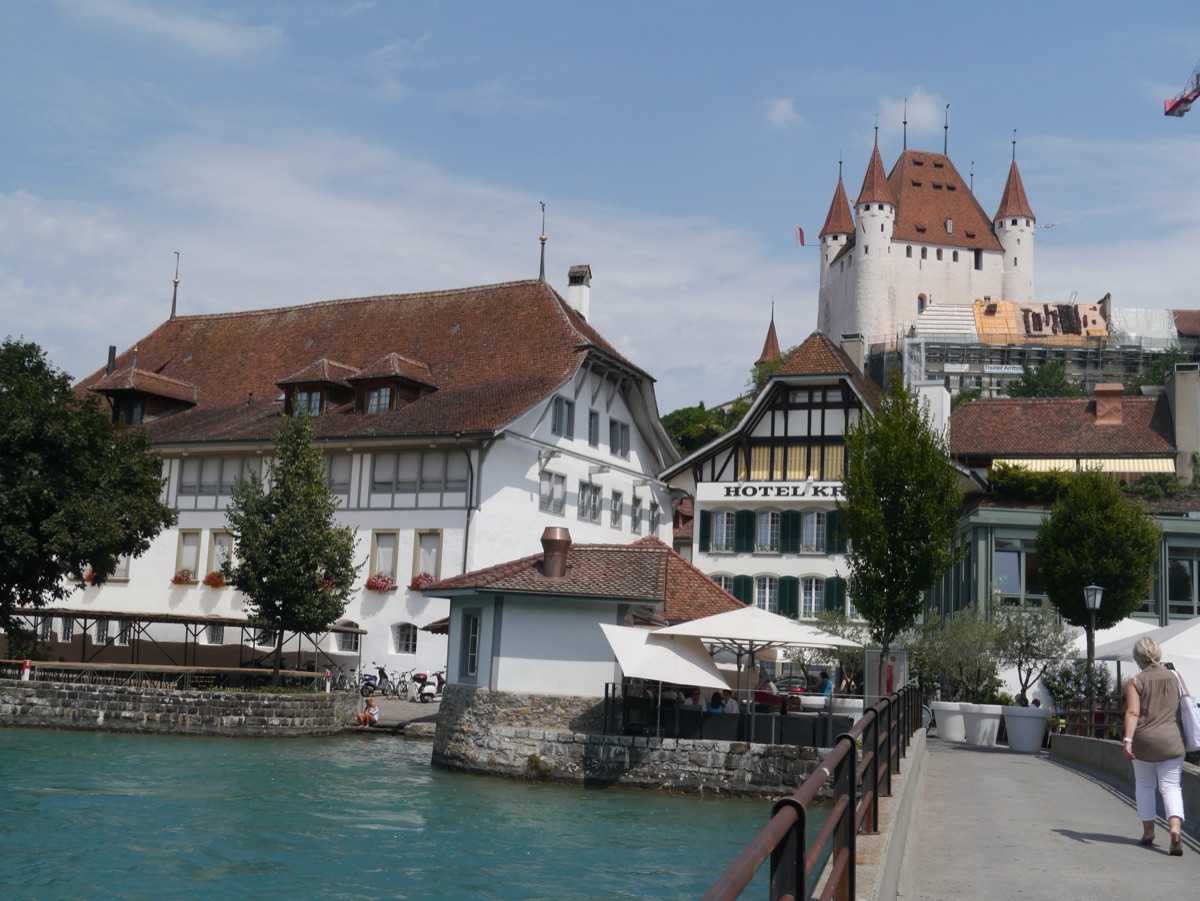
Thun's average active listing earned about CHF 23,300 (USD 27,900 @ 0.835) over the 12 months to July 2026, at a CHF 185 ADR and 43.7% occupancy, across 121 tracked listings — with a 65-day booking lead and a municipal Kurtaxe of CHF 3.00 per adult per night. Source: AirROI Thun dataset, Aug 2025–Jul 2026.
Thun sits at the western end of Lake Thun, a gateway between Bern and the Bernese Oberland. It is a genuinely boutique short-term rental market: AirROI's 2026 dataset counts just 121 active listings, but supply is growing fast — up 39.1% year-over-year — while nightly rates have risen. Small markets like this reward well-positioned, well-reviewed listings disproportionately, because there is less room for a mediocre location to rely on search volume alone.
For a Montreux-host company, Thun matters as a clear comparison to the Riviera's own markets: similar lake-and-mountain appeal, but lower average revenue than Lake Geneva and a far lighter regulatory touch.
What Thun Airbnb Hosts Earn: The Headline Numbers
AirROI's dataset for the 12 months to July 2026 gives the clearest picture of Thun's short-term rental economics:
- Average annual revenue: USD 27,900 (≈ CHF 23,300)
- Average daily rate (ADR): USD 221 (≈ CHF 185)
- Occupancy: 43.7%
- RevPAR: USD 102 (≈ CHF 85)
- Active listings: 121
- Booking lead: 65 days
- Revenue growth vs. prior year: −5.8% (supply up 39.1%)
The −5.8% year-on-year revenue dip against a 39.1% supply surge is the story to watch: Thun is getting more competitive as more hosts enter. ADR is stable, but occupancy pressure is rising — exactly the environment where professional pricing and guest experience separate the top decile from the rest.
Monthly Revenue, Occupancy and Seasonality
Thun is highly seasonal, with the strongest demand in August, June and May (the lake-and-hiking high season) and the softest stretch from January to March. AirROI breaks the market into tiers:
- Top 10% of listings: USD 6,555+ per month, 81%+ occupancy, $400+ ADR
- Top 25%: USD 4,340+ per month, 66%+ occupancy
- Median: USD 2,514 per month, ~45% occupancy
- Bottom 25%: USD 1,308 per month, ~24% occupancy
The absolute peak month is August (USD 5,433, 69.7% occupancy, USD 287 ADR); the slowest is January (USD 1,690, 29.0% occupancy, USD 187 ADR). Average seasonal revenue runs USD 4,869/month in peak season, USD 3,063 in shoulder, and USD 1,763 in the low season.
The gap between the top 10% (USD 181 RevPAR) and the bottom 25% (USD 55) is USD 126 — the widest split in this data, a sign that in a small lake market, quality, location and pricing discipline drive outsized returns.
Kurtaxe and Taxes in Thun
Guest taxes are an unavoidable cost to price into your rates. Thun city's Kurtaxe, set by the Gemeinderatsbeschluss in force since 1 February 2018, applies per person per night:
- Chalets, holiday apartments, private rooms, tents and caravans: CHF 3.00 per adult, CHF 1.50 per child
- Hotels and pensions: CHF 3.50 per adult, CHF 1.75 per child
On top of the municipal Kurtaxe, the canton of Bern levies a Beherbergungsabgabe of roughly CHF 1.00 per person per night (guests 16 and over). Owners typically collect both from guests and remit them, so it is a pass-through rather than a margin cost — but it must be declared and budgeted.
Market Composition: What Kind of Property Performs
Thun's 121 listings skew heavily toward whole-home rentals — 67.8% entire home/apartment vs. 32.2% private rooms — and 75.2% are apartments/condos, reflecting the local real-estate stock. One-bedroom units dominate (47.9%), and together one- and two-bedroom units make up 67.7% of supply. Almost half of listings (45.5%) disclose their exact location, and hosts average 24.1 photos per listing.
Operationally, it is a quality-competitive market: 61.2% of hosts are Superhosts (vs. 1.7% professionally managed). Cleaning fees are standard practice (76% charge one; median USD 94), and 38% of listings use a 30+ night minimum stay — the most common setting, reflecting Thun's mix of longer stays and seasonal letting.
Licensing and Regulation in Thun
AirROI scores Thun's regulation level as low, with minimal short-term-rental registration activity and no licensed listings found among those analysed. Unlike stricter Swiss markets, there is no municipal mandatory registration regime for short lets in the dataset — but standard obligations still apply: guest tax collection, safety standards, building rules, and any condominium (PPE) or by-law restrictions in your building.
Because rules can change and the landscape is evolving quickly as supply grows, confirm current requirements directly with the municipal authorities before listing.
Is Thun Right for Your Short-Term Rental?
Thun rewards owners who plan for seasonality. The August-to-January swing is sharp, so build cash reserves in the peak months and use dynamic pricing through the shoulder season. The 65-day booking lead gives you predictability for the high season, but the rising supply means you cannot rely on demand alone — strong reviews, a visible exact location and disciplined pricing matter more every month.
If you are weighing Thun against the broader Swiss lake market, expected annual revenue (CHF ~23,300) sits well below Lake Geneva hotspots while carrying a much lighter regulatory load — a trade-off that suits owners who favour flexible operation over maximum top-line.
Estimate What Your Property Could Earn
RivieraHost manages licensed, fully furnished apartments across Switzerland with a flat ~20% commission and a track record of ~87% occupancy (+34% vs. self-management). Tell us about your property and we will give you a data-backed revenue estimate for your market — Thun or anywhere else.
Thun Short-Term Rental FAQ
How much do Airbnb hosts earn in Thun?
AirROI's 2026 dataset (Aug 2025–Jul 2026) shows Thun's average active listing earned about USD 27,900 (≈ CHF 23,300) over the year, at a USD 221 (CHF 185) ADR and 43.7% occupancy, across 121 tracked listings.
What is the Kurtaxe in Thun?
Thun city charges CHF 3.00 per adult per night in chalets, holiday apartments and private rooms (children CHF 1.50), in force since 1 February 2018, plus the cantonal Bern Beherbergungsabgabe of about CHF 1.00 per person per night (16+).
Is Thun a good market for short-term rentals?
Yes, with caveats. It is boutique (121 listings, supply up 39.1%) with low regulation and a 65-day booking lead, but revenue is highly seasonal — peak in August, sharp low in January — so pricing and cash-flow planning decide whether you beat the CHF 23,300 average.
Do I need a license to rent short-term in Thun?
AirROI rates Thun's regulation level as low, with no licensed listings found among those analysed. Guest tax collection, safety standards and building/PPE rules still apply — verify current requirements with the local authorities.