Own two apartments on the same floor? Three in the same stairwell? The standard approach is to list them separately on Airbnb — different calendars, different cleaning arrangements, slightly different prices set at slightly different times. It works. It just doesn't work well.
The apart-hotel model treats your building as a single hospitality product. Every unit shares one pricing calendar, one cleaning team, one guest communication workflow, and one brand identity. The result is lower cost-per-unit, higher occupancy, and access to corporate and extended-stay segments unavailable to scattered individual listings.
In 2024, Switzerland recorded 42.8 million overnight stays — a record high representing a 2.6% increase year-on-year and the highest foreign demand in over 50 years (Swiss Federal Statistical Office, 2025). Much of that demand flows through platforms where professional multi-unit operators consistently outperform individual hosts. This guide explains how to capture that advantage when you own multiple apartments in the same building.
Key takeaways:
- In Vaud (the canton covering Montreux), the median short-term rental earns roughly CHF 38,500 per unit per year — versus CHF 20,000–24,000 for a long-term tenancy (Airbtics, 2025).
- The global apart-hotel market is growing at a 10.9% compound annual rate through 2030 (Cognitive Market Research, 2025). Demand for apartment-style accommodation now accounts for nearly half of all short-term rental bookings worldwide.
- In Vaud, Airbnb automatically collects and remits tourist tax since February 2025 — simplifying compliance for owners scaling beyond one unit.
- At three or more units in the same building, the time saved through professional management reliably exceeds the 20% management fee — before counting the revenue uplift from specialist pricing.
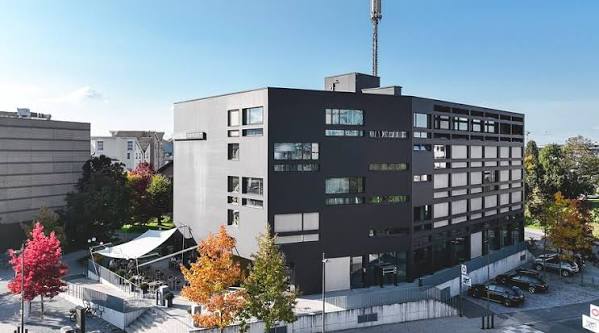
The apart-hotel model treats multiple units in one building as a single managed hospitality property.
Short answer: Own 2+ apartments in the same Montreux building? Earn up to CHF 46,000 per unit yearly running them as an apart-hotel. Legal setup, ops, and revenue model.
In this guide
- Why owning multiple units in the same building changes the economics
- What an apart-hotel actually means — and what it doesn't
- The Swiss legal and regulatory reality
- Building the operation: from separate apartments to a unified property
- What does the revenue actually look like?
- When does professional management make more sense than doing it yourself?
- Frequently asked questions
- The bottom line
Why owning multiple units in the same building changes the economics
Single-unit Airbnb hosts face fixed overheads that don't scale. Cleaning setup, key handover logistics, linen management, and guest communication each cost time and money whether the property earns CHF 25,000 or CHF 50,000 that year. When you run two or three units in the same building, those fixed costs are spread across meaningfully higher revenue.
The Swiss short-term rental market has more than doubled in the past decade — from around 14,000 listings in 2015 to over 35,800 today (Airbtics, 2026). Within that competitive market, multi-unit operators consistently achieve higher occupancy than single-unit hosts because they can absorb guests whose first-choice dates are already taken and redirect them to the next available unit in the same building.
The specific economies you gain when units share a building include:
- Cleaning efficiency: A team already on-site for unit 1 can turn unit 2 in the same visit. Travel time — often 30–45 minutes per separate property — disappears entirely. Turnaround coordination across units becomes a schedule, not a logistics problem.
- Linen and supplies: One centralised linen inventory serves all units. Bulk commercial laundry contracts bring per-item costs down 20–30% compared to per-unit domestic arrangements.
- Access management: One smart-lock system or key-handover point serves the whole building. Guests receive unique entry codes; your cleaning team operates on a master building code. No physical key handover, no late-night calls.
- Maintenance: One reliable contractor already familiar with your building handles all units. Response time is faster; cost per call is lower because they're not billing for travel between separate addresses.
- Pricing: One demand calendar applied across all units gives you occupancy visibility across the whole property — which is what drives genuine dynamic pricing rather than guesswork.
What an apart-hotel actually means — and what it doesn't
The term "apart-hotel" (or "aparthotel") describes a property that combines the self-contained nature of a furnished apartment with the operational consistency of a hotel. Guests get their own kitchen, living area, and laundry — but they also get a consistently cleaned space, a clear contact if something breaks, and a product that looks and feels the same each visit.
You don't need to file special paperwork to operate this model. In Switzerland, "apart-hotel" describes an operating approach, not a regulated legal category. What matters is how you actually run the units:
- All units are furnished to a consistent standard and photographed in the same style.
- All units are cleaned by the same team using the same checklist.
- All units are priced from a single demand calendar with unified seasonal logic.
- All units share a brand identity on booking platforms — for example, "Riviera Residences — Apartment A" and "Riviera Residences — Apartment B".
- Guest communication is handled centrally: one inbox, one workflow, one voice.
At that level of consistency, you're no longer running several Airbnbs. You're running a hospitality property. Larger operators do this at scale — brands such as Sonder, Zoku, and Adagio manage hundreds of apartments this way. The model works identically at smaller scale: our Villa Bossonnens listing runs three independent living spaces under one roof with a single pricing calendar and cleaning team, exactly as described above.
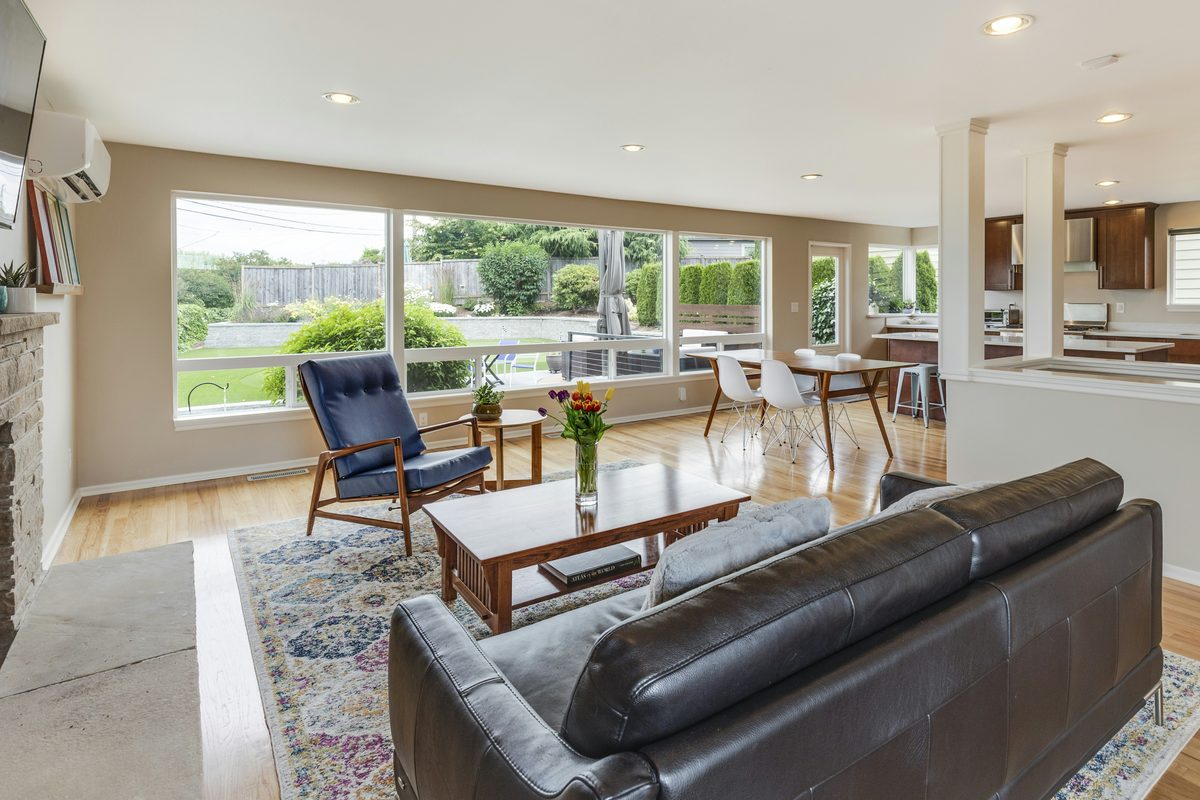
Consistent furnishing and photography across all units is the foundation of the apart-hotel brand identity.
The Swiss legal and regulatory reality
Switzerland has no national short-term rental law. Rules vary by canton, and the rules that affect multi-unit operators differ from those affecting single-unit hosts. For owners in Vaud — the canton that includes Montreux — the key points are as follows.
Tourist tax (taxe de séjour)
Since February 2025, Airbnb automatically collects and remits the tourist tax in Vaud municipalities that have opted in, including Montreux. For hosts, this eliminates the most administratively burdensome compliance task that traditionally accompanied scaling beyond one unit. Tourist tax across Swiss cantons typically ranges CHF 2–7 per guest per night (LodgeCompliance, 2025).
The 90-day rule
Several cantons impose a residential 90-day annual cap on short-term rentals: Geneva and Lucerne are the clearest examples. Vaud does not impose this blanket residential cap. However, your building's strata charter (règlement de copropriété) may restrict commercial activity. Review that document before scaling — it's a private contract between co-owners, not cantonal law, but it binds you just as firmly. Learn more in our complete registration guide for Montreux.
VAT and commercial classification
In Switzerland, VAT registration with the Federal Tax Administration is mandatory when gross annual turnover from all sources exceeds CHF 100,000. Three apartments generating CHF 38,000 each cross that threshold. Engage a Swiss fiduciary early to structure the activity correctly — whether through your existing entity, a GmbH, or an SA. The conversation costs far less than a retrospective VAT audit.
Fire safety
If you formally register as a hotel-category establishment, cantonal fire safety standards apply. For a privately operated apart-hotel (not officially listed as a hotel), standard residential fire rules apply — but the prudent baseline is smoke detectors in every room, a printed emergency procedure in each unit, and a documented maintenance log for your building's safety equipment.
Building the operation: from separate apartments to a unified property
The gap between "a few Airbnbs" and a functioning apart-hotel is almost entirely operational. Here's the infrastructure that makes the difference.
Smart access
Install one access control system across all units — Nuki, Schlage Encode, or equivalent. Guests receive unique codes generated per booking and expiring automatically at checkout. Your cleaning team operates on a master building code. No physical key handover, no lockouts, no 11pm calls about lost keys.
Property management software
Platforms such as Hostaway, Guesty, or Lodgify aggregate all unit calendars, automate guest messaging, and prevent double-bookings across Airbnb, Booking.com, and direct channels simultaneously. Multi-platform distribution (Airbnb plus at least one other channel) consistently delivers 15–25% higher occupancy than single-platform listings.
Unified cleaning protocol
Write a master cleaning checklist that applies identically to every unit. Brief one team on the whole building. Stagger checkout times by 30 minutes across units so the team moves sequentially floor by floor, rather than crossing the city between jobs. A shared linen par stock — three sets per bed across all units — keeps one set on the bed, one clean and ready, and one at the laundry. A bulk commercial laundry contract handles the volume at materially lower per-item cost.
One welcome guide for the building
A single digital guest guide (Notion, Touchstay, or a well-structured PDF) covers building-wide information: parking, rubbish collection days, emergency contacts, and local recommendations. Unit-specific details — Wi-Fi password, appliance instructions — live on a one-page insert. One document to maintain; every unit benefits from every update.
What does the revenue actually look like?
In Vaud, Airbtics (2025) reports a median annual short-term rental revenue of approximately €35,000 — roughly CHF 38,500 — per listing, at 63% occupancy and a CHF 172 average daily rate. Compare that to a long-term furnished rental in the same market, which typically yields CHF 20,000–24,000 per year at current reference rent levels.
A professionally managed multi-unit property, with occupancy slightly above the median and seasonal rate optimisation applied across Jazz Festival, Christmas Market, and summer shoulder months, typically lands at CHF 44,000–48,000 net of the 20% management fee. The table below models a three-unit building under each approach.
| Management model | Per unit / year | 3-unit building total | Occupancy |
|---|---|---|---|
| Long-term rental | CHF 22,000 | CHF 66,000 | 100% (fixed tenancy) |
| Self-managed STR (Airbnb only) | CHF 38,500 | CHF 115,500 | 63% (Vaud median) |
| Managed apart-hotel (multi-platform) | CHF 46,000 | CHF 138,000 | ~68–72% |
The managed apart-hotel figure already accounts for the 20% management fee. The CHF 7,500 gap per unit between self-managed and professionally managed is driven by three factors: multi-platform distribution filling dates Airbnb alone misses; specialist event pricing during the Jazz Festival and Christmas Market; and the operational overhead the owner no longer bears.
For a detailed breakdown of how nightly rates and occupancy interact in Montreux across all twelve months, see our income calculator guide.
When does professional management make more sense than doing it yourself?
Self-managing one short-term rental in Montreux requires approximately 5–8 hours of active management per week — guest messages, cleaning coordination, pricing adjustments, maintenance calls, calendar management. That estimate holds roughly flat for a second unit in the same building (shared logistics), then grows nearly linearly from the third unit onward.
Three units in one building, managed without dedicated software or a team: realistically 18–24 hours per week. At Swiss minimum wage, the value of that time is roughly CHF 18,000–24,000 per year — before you've earned a single franc above what the apartments would make with a manager anyway.
The economics of professional management improve as unit count rises:
- 1 unit: Management fee may not be fully justified versus careful DIY. The margin is close.
- 2 units, same building: Break-even. Time saved roughly equals fee paid at typical management rates.
- 3+ units, same building: Professional management is nearly always the right financial decision on time-return alone, before accounting for revenue uplift from specialist pricing and multi-platform distribution.
The hidden costs of self-management — missed maintenance until it becomes expensive, under-pricing during event periods, late responses that lower your ranking — compound quietly across multiple units. For a full breakdown, see our guide to the real cost of self-managing.
Related reading: How much can you earn on Airbnb in Montreux? · How to legally register for short-term rental · Airbnb pricing strategy 2026 · Complete guide to renting your Montreux apartment

10+ years in hospitality. BBA Hospitality (Glion), MSc Tourism (FHGR), MSc Data Science (HSLU).
Already own multiple apartments in Montreux?
RivieraHost manages multi-unit buildings as a single property — one pricing calendar, one cleaning team, one 20% all-inclusive fee. No setup cost. We earn when you earn.
Discuss your building →Frequently asked questions
Do I need a commercial licence to run multiple apartments as an apart-hotel in Switzerland?
Not for the apart-hotel operating model itself. Switzerland has no national STR licence. In Vaud (Montreux), there is no residential 90-day cap for commercially operated properties. However, if gross STR revenue exceeds CHF 100,000 per year, VAT registration with the Swiss Federal Tax Administration is mandatory.
What is the minimum number of apartments to make the apart-hotel model viable?
Two units in the same building already unlock shared cleaning and access management savings. The model becomes clearly superior to DIY self-management at three or more units, where time saved by professional coordination reliably exceeds the management fee — before counting the revenue uplift from specialist pricing and multi-platform distribution.
Can I keep all units on Airbnb, or do I need other platforms?
Airbnb alone limits your reach significantly. Multi-platform distribution — Airbnb plus Booking.com plus direct bookings — consistently delivers 15–25% higher occupancy than single-platform listings. Property management software such as Hostaway or Guesty synchronises calendars across all platforms and prevents double-bookings automatically.
How does RivieraHost approach multi-unit buildings?
RivieraHost treats each building as one managed property: a single pricing calendar across all units, one cleaning team operating from a master building checklist, and centralised guest communication. The 20% all-inclusive fee covers photography, listing management, 24/7 guest support, cleaning coordination, check-in, and monthly owner reports. No setup cost, no retainer.
What happens with VAT and taxes when I run multiple STR units?
VAT registration is mandatory in Switzerland once gross turnover exceeds CHF 100,000 per year. Tourist tax in Vaud is automatically collected and remitted by Airbnb since February 2025. For income tax, STR revenue from multiple units is typically classified as self-employment income. Engage a Swiss fiduciary before scaling beyond two units.
The bottom line
Multiple apartments in one building are not just several rental properties — they're the starting point for a miniature hospitality business. The apart-hotel model closes the operational gap between what individual Airbnb hosts can achieve and what coordinated professional management delivers: a single brand, a single pricing strategy, and shared infrastructure that reduces cost-per-unit while raising both occupancy and rate.
The step change happens at three units. Below that, the model still improves on isolated self-management. At three and above, the decision to manage professionally is almost always justified by time return and revenue uplift combined. If your building is already generating STR income, the question isn't whether to consolidate — it's when.
Explore how RivieraHost currently manages properties across Montreux on our properties page, or read the seasonal pricing strategy guide to understand how event-driven rate optimisation works in practice.
Base yourself in Montreux
RivieraHost’s apartments sit steps from the lake — with kitchens, more space and better value than a hotel for families and groups. Every one is right on this guide’s doorstep.