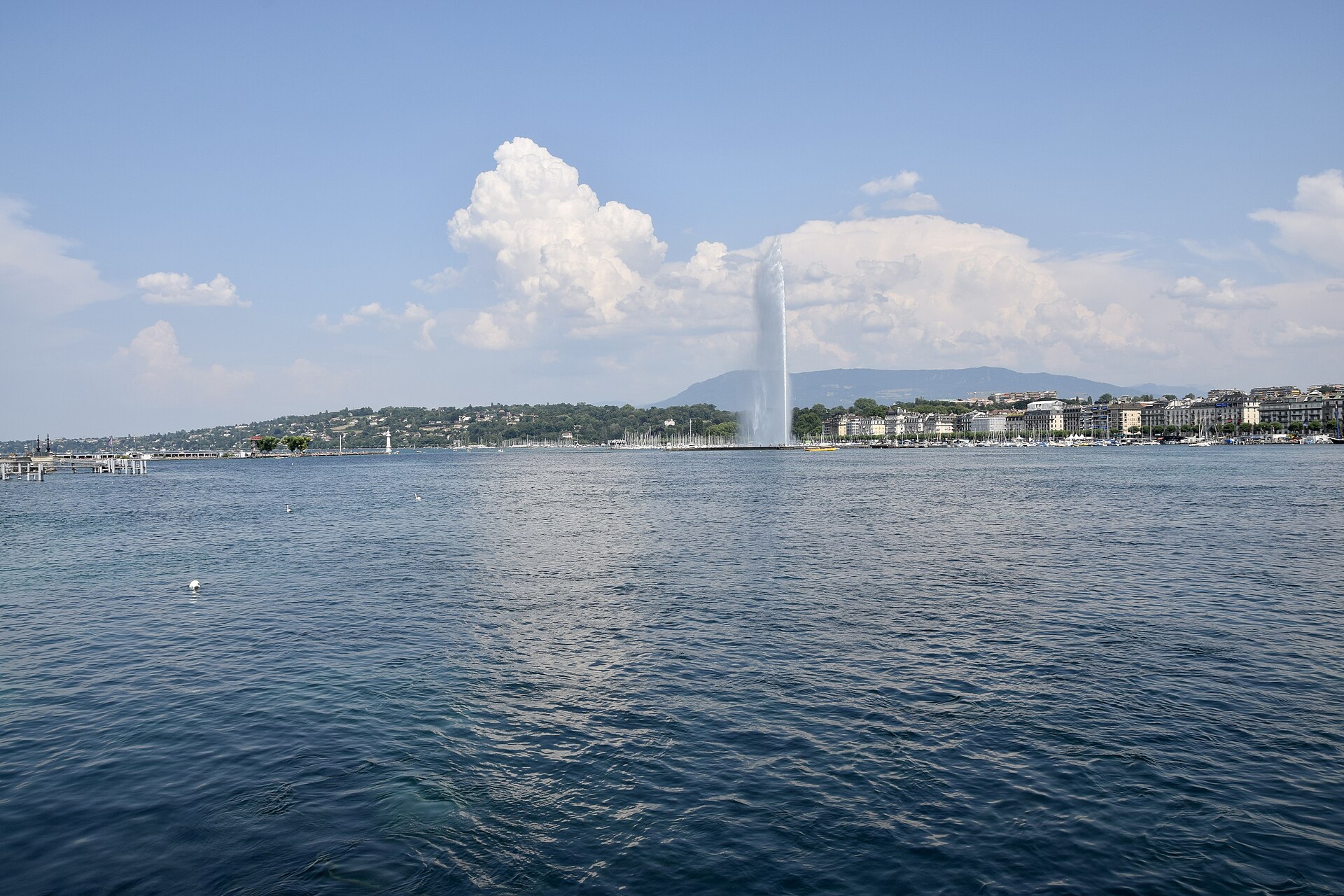
Geneva is Switzerland's highest-priced short-term rental market per night — and its most restricted one per year. The canton caps short letting of a dwelling at 90 nights a year. That single rule changes the question every Geneva owner should be asking. In Montreux or Valais the question is “how do I fill more nights?”. In Geneva it is “how do I earn as much as possible from the 90 nights I am allowed to sell?”
This guide sets out what Geneva apartments actually earned in the twelve months to April 2026, what the 90-night ceiling does to that arithmetic, what the taxe de séjour costs your guests, what happens if you go past 90 nights — and what a compliant Geneva owner can realistically do about all of it.
In this guide
- What a Geneva short-term rental earns in 2026
- The 90-night ceiling: the number that defines Geneva
- What happens past 90 nights: authorisation, use change and fines
- The tourist tax: CHF 4.25 per person per night
- The only lever left: raising your nightly rate
- Who still profits in Geneva — and how we would run a Geneva flat
- Frequently asked questions
What a Geneva short-term rental earns in 2026
The market data for the twelve months to April 2026 is unambiguous about the size of the Geneva market and the size of the average prize. Across roughly 942 active short-term listings in the city, the average listing turned over USD 19,432 a year at a USD 185 average daily rate and 44.1% occupancy.
| Geneva short-term rental market, 12 months to April 2026 | Value |
|---|---|
| Active short-term listings | 942 |
| Average daily rate (ADR) | USD 185 (approx. CHF 150) |
| Occupancy | 44.1% |
| RevPAR (revenue per available night) | USD 81 |
| Average annual revenue per listing | USD 19,432 (approx. CHF 15,700) |
| Median listing, monthly revenue | USD 2,109 (approx. CHF 1,700) |
| Top 25% of listings, monthly | USD 3,480 and above |
| Top 10% of listings, monthly | USD 5,097 and above |
| Bottom 25% of listings, monthly | USD 1,041 |
| Supply growth, year on year | +49.1% |
| Revenue growth per listing, year on year | −2.1% |
| Typical booking lead time | 45 days |
Two numbers in that table matter more than the rest. Supply in Geneva grew 49% in a year while revenue per listing fell 2.1%. More flats are competing for the same guest nights, and the nights each flat may legally sell are capped. That combination is why pricing discipline, not simply being present on Airbnb, is what separates the median listing at roughly CHF 1,700 a month from the top quartile at 3,480+.
The occupancy spread says the same thing: the top quarter of Geneva listings run at 70% occupancy or better and the top tenth at 85% or better, against a city median around 47%. High occupancy in Geneva is rarely luck — it is a flat positioned for the demand that actually exists there, priced and described for it.
The 90-night ceiling: the number that defines Geneva
In Geneva, a dwelling may be let on a hosting platform for a maximum of 90 days a year (art. 4A of the cantonal regulation on demolitions, transformations and renovations — RDTR). At the market's USD 185 average nightly rate, that ceiling is about USD 16,650 — roughly CHF 13,500 — of gross bookings a year, before platform commission, cleaning or the tourist tax. The ceiling applies to the nights put at guests' disposal, not to how well the flat is managed.
The rule came into force on 1 April 2018 under art. 4A RDTR, which first capped platform letting of a whole dwelling at 60 days a year. The Cour de justice raised that ceiling to 90 days, a change confirmed by the Federal Court (1C_472/2018). Ninety nights is therefore not a target to optimise towards; it is the outer edge of the legal envelope for a normal apartment let through a platform.
Compare the ceiling with the market average and something important appears. At USD 185 a night, USD 19,432 of annual revenue implies around 105 nights sold — about 15 nights more than a capped residential dwelling may legally let. In other words, the average in that dataset is not a capped residential flat: the top of the Geneva market (USD 5,097+ a month) is made up of authorised tourist accommodation — registered résidences meublées, aparthotels and hotels — which operate under a different authorisation and can sell every night of the year.
This is the single most useful mental model for a Geneva owner: you are not competing with the average. You are competing inside a 90-night box, and the box is the same size for every residential flat in the city.
What happens past 90 nights: authorisation, use change and fines
Letting a Geneva dwelling on a platform for more than 90 days a year is treated as a change of use: the activity becomes short-term letting “on a professional basis” and requires an authorisation, issued via the cantonal Police du commerce et de la lutte contre le travail au noir (PCTN). Short-term letting beyond the cap without that authorisation is a violation of the cantonal planning rules.
Reported exposure: penalties for unpermitted short-term letting are cited in the range of CHF 100,000 to 150,000, with the department able to grant exemptions case by case. If you rent your apartment rather than own it, subletting also requires the landlord's written consent and is prohibited outright in subsidised housing (art. 31B of the law on subsidised housing, LGL).
Enforcement in Geneva is thin, and you should not mistake that for permission. In answer to Grand Council question Q 4090-A in August 2025, the Council of State confirmed that the department carries out no systematic checks and had recorded no offence since 2020 — while Inside Airbnb data cited in the same answer flagged roughly 412 Geneva objects let for more than 90 nights. That gap is a live political topic, with a register of short-term renters being discussed along the lines of the system already in place in canton Vaud.
Practical read: enforcement normally starts with a complaint, a neighbour, a platform data request or a routine authorisation check linked to a sale or a mortgage. “Nobody is checking” is a description of the current state of controls, not a compliance strategy — and the canton's answer makes clear the number of nights actually let is knowable.
For the full legal picture in Geneva, including the definition of a dwelling and what counts as putting a flat at a guest's disposal, see our guide Is Airbnb legal in Geneva? The 90-day rule explained.
The tourist tax: CHF 4.25 per person per night
Guests in Geneva pay a taxe de séjour of CHF 4.25 per person per night (CHF 2.50 for camping), fixed by the cantonal regulation implementing the law on tourism (art. 16). Since 1 September 2020, Airbnb collects and remits this tax automatically on Geneva bookings. If you let outside a platform, remitting it is your job.
Three consequences worth knowing before you price anything:
- It is charged on top of your nightly rate, per person. A couple staying 90 nights generates CHF 765 of tourist tax over a year — money that passes through, not revenue.
- It penalises larger groups. A four-guest booking carries CHF 17 a night in tax. For family and group demand, the total bill matters more than the headline rent, which is one reason Geneva's strongest demand is business and couple travel rather than large groups.
- It is not part of the number you quote as income. When we model a Geneva flat for an owner, the tourist tax is a pass-through line, never part of net revenue.
Short-let income itself is of course taxable in Switzerland, and VAT can come into play depending on turnover and structure. Our companion guide on Airbnb tax and VAT in Montreux walks through how the mechanics work for a Swiss operator.
The only lever left: raising your nightly rate
When nights are capped at 90 by law, annual revenue reduces to one multiplication: nights × nightly rate. There is nothing else to pull. That makes Geneva the most rate-sensitive short-term rental market in Switzerland — and it makes the difference between an average flat and a top-quartile flat entirely a pricing and positioning question.
| 90 nights a year, priced at | Gross bookings a year |
|---|---|
| CHF 185 a night (market average ADR) | CHF 16,650 |
| CHF 220 a night (well-positioned 2-room) | CHF 19,800 |
| CHF 250 a night (business-ready, central) | CHF 22,500 |
| CHF 250 a night, 70 of the 90 nights sold | CHF 17,500 |
The gap between the first and third line is CHF 5,850 a year from pricing alone, at the same address and the same number of nights. That is the whole game in Geneva.
What the data says about how to get there:
- Demand is business-led. A typical 45-day booking lead time and a strong midweek pattern mean the guests who pay most are travelling for work. A proper desk, dependable Wi-Fi, blackout curtains, a good coffee setup and flexible self check-in are not decoration in Geneva — they are the rate.
- Seasonality is sharp. June is the strongest revenue month of the year and February the weakest; average nightly rates peak in April. Feed that into your calendar instead of discounting uniformly: hold rate in the strong weeks, and accept lower occupancy in the February trough rather than cutting price across the whole year.
- Occupancy above the median matters less than you think. In a 90-night market, moving from 70% to 85% of the cap adds 14 nights — worth having, but it will never beat a CHF 65 rate increase. Price first, fill second.
- Direct and repeat guests keep more of each night. Every platform booking carries commission on a night you cannot replace. On a 90-night budget, each direct booking is worth materially more than the same night sold through a channel.
Who still profits in Geneva — and how we would run a Geneva flat
Geneva is not a market for volume landlords. It is a market for one to three well-located flats, priced properly, sold to guests who value being central and can pay for it. The owners who do well share a recognisable profile: small, central, business-ready flats; 2–4 night stays; a calendar that is managed rather than filled; and no ambition to test the 90-night line.
- Price for the cap, not around it: model 90 nights as fixed inventory and set rates to maximise the value of those nights, not occupancy percentage.
- Keep the count and keep the proof: record the nights each year, the platform used and the guest for each stay. If the canton ever asks, a documented year is the whole defence.
- Stay inside the envelope: no informal fifth booking pushed through to beat the cap, no unpermitted “professional” short letting, no subletting without written consent.
- Handle the tourist tax properly: platform-collected where possible, declared and remitted where you let directly.
- Position for the guest who pays: central, quiet, workspace, fast check-in, four-star standard of linen. This is what converts a CHF 185 market rate into a CHF 250 flat.
- Rest the flat in the trough instead of destroying your rate card in February.
Across our own managed portfolio we see professionally operated apartments average around 87% occupancy and roughly 34% more revenue than comparable self-managed listings, for a flat 20% commission that covers pricing, marketing, guest vetting, cleaning coordination and compliance paperwork — with 30 days' notice if an owner wants the keys back. In Geneva that structure is not a nice-to-have: with nights capped, the small number of decisions that fill those nights is the entire business. You can see how that works in practice on our Geneva Airbnb management service page.
What could your Geneva apartment earn inside the 90-night cap?
Send us the address and the layout. We will project a realistic annual figure at Geneva rates, with the tourist tax and compliance lines shown separately.
Get a free revenue estimate
10+ years in hospitality. BBA Hospitality (Glion), MSc Tourism (FHGR), MSc Data Science (HSLU).
Frequently asked questions
How much can a short-term rental in Geneva earn?
Around USD 19,432 a year on average per listing in the twelve months to April 2026, at a USD 185 average nightly rate and 44.1% occupancy. The median listing earns about USD 2,109 a month, the top quarter USD 3,480 or more and the top tenth USD 5,097 or more. A residential flat restricted to the 90-night cap can gross roughly USD 16,650 (about CHF 13,500) at the average rate.
What is Geneva's 90-night rule?
A dwelling in Geneva may be let on a hosting platform such as Airbnb for a maximum of 90 days a year, under art. 4A of the cantonal regulation on demolitions, transformations and renovations. The limit came into force on 1 April 2018 at 60 days a year and was raised to 90 days by a court decision, upheld by the Federal Court.
What happens if I let my Geneva flat for more than 90 nights?
Beyond 90 days the activity is treated as a change of use and professional short-term letting, which requires an authorisation from the cantonal Police du commerce et de la lutte contre le travail au noir (PCTN). Letting beyond the cap without authorisation is a violation of cantonal planning rules, with reported penalties in the CHF 100,000 to 150,000 range and case-by-case exemptions possible. If you are yourself a tenant, subletting also requires your landlord's written consent.
How much is the taxe de séjour in Geneva and who pays it?
CHF 4.25 per person per night (CHF 2.50 for camping), set by the cantonal regulation implementing the law on tourism. Airbnb has collected and remitted it automatically on Geneva bookings since 1 September 2020. It is charged to the guest on top of the nightly rate and is not part of rental revenue.
Is Geneva's 90-night rule actually enforced?
In August 2025 the Council of State told the Grand Council that the department runs no systematic checks and had recorded no offence since 2020, while Inside Airbnb data cited in the same answer identified about 412 Geneva objects let for more than 90 nights. Enforcement normally begins with a complaint, platform data or an authorisation check, so the absence of routine controls is not a compliance strategy.
Related reading: Is Airbnb legal in Geneva? The 90-day rule explained · Short-term rental income in Zurich in 2026 · All owner guides
Sources: AirROI Geneva short-term rental dataset, 12 months to April 2026 (retrieved 15 September 2026); République et canton de Genève, taxe de séjour and short-term letting guidance (ge.ch), including RDTR art. 4A and art. 16 of the regulation implementing the law on tourism; Grand Council of Geneva, answer to question Q 4090-A, August 2025, citing Inside Airbnb data. Currency conversions use approximately CHF 0.81 per USD. This guide is market analysis, not legal or tax advice.
Base yourself in Montreux
RivieraHost’s apartments sit steps from the lake — with kitchens, more space and better value than a hotel for families and groups. Every one is right on this guide’s doorstep.