Two cantons of mountains and lakes, two economies built entirely around tourism — and yet two very different philosophies for regulating short-term rental. In Valais, letting an apartment or a chalet to tourists without hotel services requires, at the cantonal level, only a simple declaration to the commune (a “duty of notification”). In the canton of Vaud, the same activity runs through a more administered framework: municipal authorisation or registration in tourist communes, a per-night tourist tax, and a separate tax on secondary residences.
This guide explains concretely how short-term rental registration works on the Valais side, why the administrative burden is lighter, and what really differs compared with canton Vaud.
Key points: In Valais, letting a dwelling to tourists without hotel services is subject only to a simple duty of notification to the municipal council — not to an operating licence. The operating licence (with a cantonal exam) applies only to accommodation with hotel services (hotels, B&B, campsites). On the tourist-tax side, Valais communes can opt for a flat annual fee on holiday homes instead of a per-night tax. In Vaud, the municipal authorisation or registration, the per-night tourist tax (partly collected by Airbnb since 2023) and the tax on secondary residences make the process heavier.
⚠️ This is general information, not legal advice. Local rules may add conditions in certain communes. Always check with your commune or a professional before the first booking.
In short: in Valais, letting a tourist dwelling without hotel services is a simple communal declaration, with the option of a flat annual tourist fee; in canton Vaud the activity is more regulated (communal authorisation or registration, per-night tourist tax, tax on secondary residences).
In this guide
- Two systems, two philosophies
- Valais: a simple declaration for letting without hotel services
- The tourist tax: the flat-fee option on holiday homes
- Vaud: a more regulated approach
- Valais vs Vaud: the comparison table
- The special case of the mountain resorts
- In practice for an owner
- Frequently asked questions
Two systems, two philosophies
Valais and Vaud share a great deal — Lake Geneva, the Alps, strong tourist demand. But their short-term rental regulation heads in opposite directions for a simple reason: in Valais, the tourist economy rests on making holiday homes available, and the canton treats this as a normal activity; in Vaud, the pressure on year-round housing (especially on the Riviera and in Lausanne) leads the authorities to regulate the tourist-letting use more closely.
Concretely, the difference plays out on three points: the base procedure (declaration vs authorisation), the way the tourist tax is collected (flat-fee option vs per-night), and the weight of the ancillary formalities (the tax on secondary residences on the Vaud side).
Valais: a simple declaration for letting without hotel services
Canton Valais clearly distinguishes two situations, defined by its Cantonal Service for Industry, Trade and Labour (SICT):
- The operating licence (autorisation d’exploiter) is required only for accommodation with hotel services: hotels, restaurants, B&B, campsites, tasting rooms, etc. It notably requires passing the compulsory cantonal exam and filing the request at least two months before the activity starts.
- The “letter” activity (loueur) — letting or subletting accommodation for tourist purposes, for payment and without hotel services, whatever the booking channel (Airbnb, Booking, agency, direct) — is subject only to a duty of notification to the municipal authority where the dwelling is located. No exam, no operating licence: a declaration.
This is precisely where Valais is eased compared with Vaud: an owner letting an apartment or chalet to tourists — without offering hotel services — only has to declare the activity to the commune at the cantonal level. The famous licence with a cantonal exam does not apply to this case.
This point is documented by the canton itself (vs.ch, page on accommodation, gastronomy and beverage retail: the letting activity is subject to a duty of notification to the communal authority).
The tourist tax: the flat-fee option on holiday homes
The second typically Valaisan convenience: the taxation of tourist presence can be flat-rate. Under article 21 paragraph 3 of the Valais law on tourism, communes may introduce a generalised flat fee for holiday homes instead of per-night counts.
For an owner, this changes daily life: instead of declaring each booking and calculating the tax per person and per night, the commune sets an annual flat amount per dwelling. Fewer statements, less paperwork, an administrative burden spread over the year.
Valais thus offers communes a simple tool: either the usual per-night tax, or the annual flat fee on holiday homes. Every owner gains in simplicity of bookkeeping.
Vaud: a more regulated approach
On the Vaud side, the framework is more administered, particularly in the lakeside tourist communes (Montreux, Vevey, Villeneuve). Three major differences from Valais:
- Municipal authorisation or registration. Operating a dwelling for tourism in Vaud runs through a formal municipal procedure: communal authorisation and registration of overnight stays in many communes, such as Montreux (see our registration and permit guide). This is not “no formality”, unlike the Valais case which stops at a declaration.
- Per-night tourist tax. The Vaud tourist tax is collected per person and per night. Since 1 April 2023 Airbnb collects and remits it automatically in the Vaud communes that joined the partnership with the Union des Communes Vaudoises (UCV); the agreement was extended to further communes on 1 February 2025. The device eases collection, but the tax is still calculated per night.
- Tax on secondary residences. Canton Vaud additionally levies an annual tax on secondary residences, stacked on top of the tourist tax (2024 model regulation on tourist taxes and secondary residences). A Vaud owner of a secondary property therefore manages two taxes; in Valais the device focuses on tourist presence.
Note also: in Vaud the regulations are designed to preserve year-round housing. That is the heart of the difference in philosophy — Valais organises short-term letting as tourist infrastructure, Vaud regulates it to protect the residential stock.
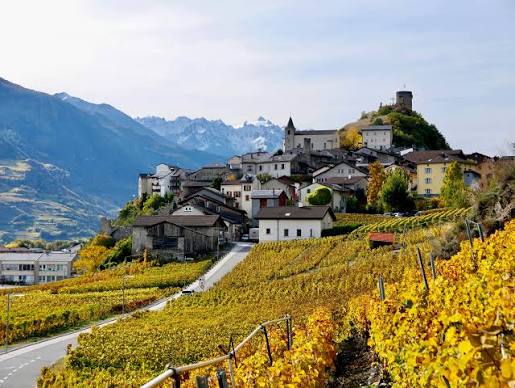
Valais vs Vaud: the comparison table
| Criteria | Canton of Valais | Canton of Vaud |
|---|---|---|
| Base regime for short-term letting (no hotel services) | Duty of notification to the commune | Municipal authorisation / registration in tourist communes |
| Accommodation with hotel services | Operating licence + cantonal exam (2 months ahead) | Formal hotel / para-hotel framework |
| Tourist tax | Per night or flat annual fee on holiday homes (art. 21 al. 3) | Per person and per night (partly collected by Airbnb since 2023) |
| Tax on secondary residences | Depending on commune (flat fee possible) | Yes, annual cumulative tax (2024 model regulation) |
| Philosophy | Light regulation, tourism as a driver | Increased regulation, protection of year-round housing |
In clear terms: for an apartment or chalet let to tourists without hotel services, the Valais starting point is a simple declaration, where Vaud requires a formal municipal procedure and a potentially double taxation. This is where Valais is “eased”.

The special case of the mountain resorts
One important nuance if you plan to build or convert a property: many Valais communes exceed the 20% secondary-residence threshold set by the Federal Act on secondary residences (LRS). In these communes, no new secondary residence may be built — but, crucially for short-term letting, the LRS permits the construction, under conditions, of dwellings intended for tourist accommodation.
In other words: where Valais restricts new secondary residences, it explicitly encourages operational tourist housing. An existing property let short-term remains perfectly possible — the restriction concerns new construction of second homes, not the tourist letting of an existing dwelling. For the detail of primary, secondary residence and activity, see our comparison of the three notions.
In practice for an owner
The concrete steps therefore differ from one side of the lake to the other:
- In Valais: contact the municipal council of the location, file your letting-activity declaration, then settle the tourist tax — per night or, depending on the commune, as an annual flat fee on the holiday home.
- In Vaud: check the authorisation or registration required by your commune (Montreux, Vevey, Villeneuve...), configure the collection of the tourist tax (including via Airbnb where applicable), and allow for the secondary-residence tax if your property is secondary.
- In both cantons: keep clean records of the rental income, because it is taxable, and above CHF 100,000 of turnover the VAT (3.8% for accommodation) becomes compulsory.
In practice at RivieraHost: we handle the declaration or authorisation, the tourist tax and the guest reporting end-to-end, in Montreux and in the Valais destinations. The potential income of a property in Valais is analysed in our ski-destination chalet income guide.
Do you own a property in Valais or Vaud?
Montreux or Verbier, we manage short-term letting end-to-end — declaration, authorisation, tourist tax, income and guest turnaround — in compliance with the rules of your commune and canton.
Talk about your property
10+ years in hospitality. BBA Hospitality (Glion), MSc Tourism (FHGR), MSc Data Science (HSLU).
Also read: How to register your Montreux rental · Vaud regulations explained · Short-term letting in Villeneuve · Primary or secondary residence for short-term letting? · Chalet income in ski destinations
Frequently asked questions
Do I need an authorisation to let my property short-term in Valais?
For a dwelling let to tourists without hotel services, no: a simple duty of notification to the commune suffices (the “letter” activity). The operating licence, with a cantonal exam, applies only to accommodation with hotel services (hotels, B&B, campsites).
How is Valais eased compared with Vaud?
The base procedure in Valais is a simple communal declaration, whereas Vaud requires a municipal authorisation or registration in tourist communes. Valais also allows a flat annual fee on holiday homes instead of a per-night tax, and does not add a cantonal secondary-residence tax on top of the tourist tax.
How is the tourist tax collected in Vaud?
Per person and per night. Since 1 April 2023 Airbnb collects and remits it automatically in the communes that joined the UCV-Airbnb partnership, extended on 1 February 2025. The communal registration or authorisation still applies.
Can I let an existing property short-term in a Valais resort above 20% secondary residences?
Yes. The LRS restricts the new construction of secondary residences, not the tourist letting of an existing dwelling. Moreover, it authorises under conditions dwellings intended for tourist accommodation, even in those communes.
What are the fiscal differences between the two cantons for short-term letting?
In both, rental income is taxable and VAT applies above CHF 100,000. The difference lies in the tourist tax: per night in Vaud (plus a tax on secondary residences), and per night or flat annual in Valais. The 2025 federal reform also changes the taxation of secondary housing from 2029.
Sources
- Canton of Valais, Cantonal Service for Industry, Trade and Labour (SICT), “Accommodation, gastronomy and beverage retail” — operating licence vs duty of notification, retrieved 27 August 2026 — vs.ch
- Valais Law on Tourism (RS 935.100) and model regulation on the tourist tax — art. 21 al. 3 (generalised flat fee on holiday homes) — lex.vs.ch
- Canton of Vaud, Model regulation on tourist taxes and secondary residences (2024) — vd.ch
- Union des Communes Vaudoises (UCV) / Airbnb — tourist tax collected by the platform (1 April 2023, extended 1 February 2025) — ucv.ch
- Federal Act on Secondary Residences (LRS), SR 702 — fedlex.admin.ch
Base yourself in Montreux
RivieraHost’s apartments sit steps from the lake — with kitchens, more space and better value than a hotel for families and groups. Every one is right on this guide’s doorstep.