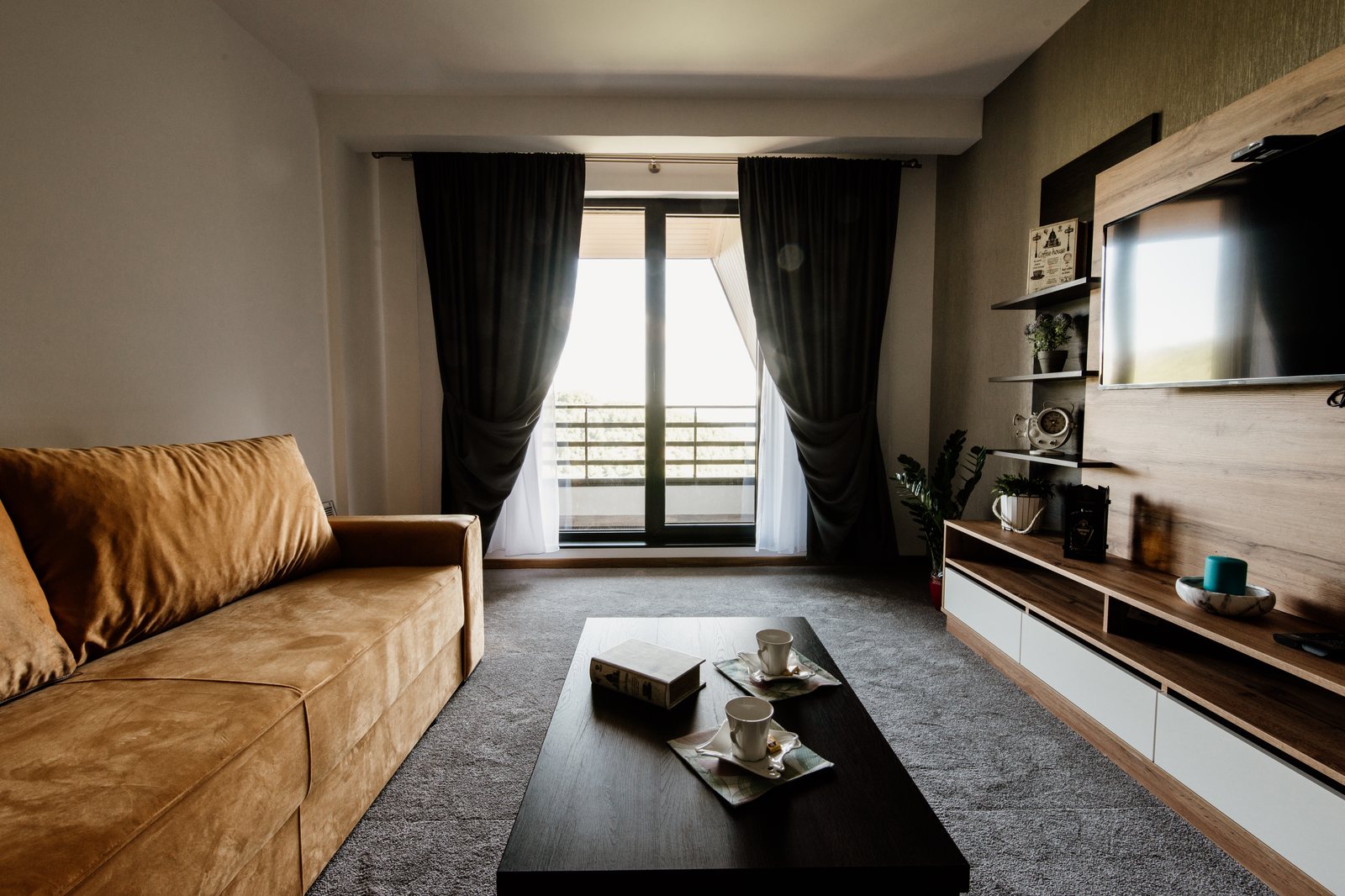
Photo: Shixart1985, CC BY 2.0, via Wikimedia Commons

An empty three-room flat in Montreux that sleeps four needs about CHF 2’700 of furniture, textiles and kitchen kit. Add the second set of bed linen that any serious short-let needs, plus the lighting, rugs and small appliances that never make it into a spreadsheet, and the first year lands between CHF 3’580 and CHF 3’880. The furniture then has a second life in your tax return, because Vaud has a specific rule for furnished lets — and it is more generous than most owners realise.
The short answer. One 160×200 double, a twin room, a sofa-bed, a table for four and a full kitchen come to CHF 2’742.50 at IKEA Switzerland list prices in October 2026.[1][2][3][4][5][6][7][8][9][10][11][12] Budget about CHF 3’580 to 3’880 all in. Nearly half of that is the beds and mattresses — which is where the money should go. On the tax side, Vaud declares the rent of a furnished dwelling at 80% of what you collect, explicitly to cover the wear on the furnishing.[13]
The inventory a four-guest listing has to have
Guests do not judge a flat on its decoration. They judge it on the bed they slept in, and whether the kitchen works for the meal they planned. A four-guest short-let therefore needs the same lines whoever the owner is: a double bed with its mattress, a twin room or a second double, a sofa that becomes a third bed, a table that seats everyone at once, four chairs, a full dinner service, a 30-piece cutlery set, two cookware sets, glasses, eight bath towels, per-bed linen with a spare set, and a kitchen actually equipped to cook in.
Where the money sits is not intuitive. Beds and mattresses alone take CHF 1’285.90 — 47% of the bill, more than the sofa-bed, the dining set and the entire kitchen kit put together. That single fact tells you where to defend the budget and where to give up on saving: nobody has ever left a bad review because the beer glasses cost CHF 3.95 rather than CHF 12, and almost every bad review in this business traces back to a mattress.
The line-by-line budget
Every price below was read off the Swiss IKEA catalogue on 16 October 2026 and is the regular list price, not a promotional one — this is a budget that does not expire with a campaign.[1][2][3][4][5][6][7][8][9][10][11][12] IKEA was running IKEA-Family promotions on three of these lines: the FRIHETEN corner sofa-bed at CHF 381.65 against CHF 449.00 regular,[3] the KÄTTIL chairs at CHF 42.45 against CHF 49.95 regular,[12] and the IKEA 365+ three-piece cookware at CHF 39.95 against CHF 49.95 before.[7] Those offers carry an end date and the budget below uses the regular price, so the total still holds when the promotion does not.
| Line | Qty | Unit CHF | Total CHF |
|---|---|---|---|
| MALM bed frame, high, 2 storage boxes, white, 160×200 cm[1] | 1 | 299.00 | 299.00 |
| VÅGSTRANDA pocket-spring mattress, firm, 160×200 cm[2] | 1 | 549.00 | 549.00 |
| DVALA fitted sheet, white, 160×200 cm[5] | 2 | 14.95 | 29.90 |
| NATTJASMIN duvet cover + 2 pillowcases, 240×220/50×60 cm[4] | 2 | 79.95 | 159.90 |
| NEIDEN pine bed frame, 90×200 cm[1] | 2 | 39.95 | 79.90 |
| ÅBYGDA foam mattress, medium-firm, 90×200 cm[2] | 2 | 179.00 | 358.00 |
| ÄNGSLILJA duvet cover + 1 pillowcase, 150×200/50×60 cm[4] | 2 | 24.95 | 49.90 |
| FRIHETEN corner sofa-bed with storage, regular price[3] | 1 | 449.00 | 449.00 |
| ÅLHULT extendable dining table, 170/220×80 cm[11] | 1 | 229.00 | 229.00 |
| KÄTTIL dining chair, regular price[12] | 4 | 49.95 | 199.80 |
| IKEA 365+ 18-piece dinner service[8] | 1 | 59.95 | 59.95 |
| MARTORP 30-piece cutlery set, stainless steel[9] | 1 | 39.95 | 39.95 |
| IKEA 365+ 3-piece cookware set, stainless steel, regular price[7] | 1 | 49.95 | 49.95 |
| GULDÖRING 4-piece cookware set, non-stick[7] | 1 | 69.95 | 69.95 |
| MJÖD beer glass, 60 cl[10] | 6 | 3.95 | 23.70 |
| VÅGSJÖN bath towel, 100×150 cm[6] | 8 | 11.95 | 95.60 |
| Furniture, textiles and kitchen kit — list prices, October 2026 | 2’742.50 |
Prices as displayed by IKEA Switzerland on 16 October 2026, VAT included, delivery and assembly not included. Replace every line with your own sourcing if you prefer — the structure of the budget, not the retailer, is the point.
What Vaud says about the furniture. The cantonal tax instructions settle the deduction question before it is asked: “Les loyers provenant de tels logements ou de logements mis en location sur une plateforme d’hébergement sont ordinairement indiqués à raison de 80% du montant encaissé, ceci afin de tenir compte de l’usure de l’ameublement et des frais d’entretien plus élevés de tels appartements.”[13] Rent from furnished dwellings, and from dwellings let through an accommodation platform, is ordinarily declared at 80% of the amount collected — precisely to account for the wear on the furnishing and the higher upkeep such flats carry. On CHF 30’000 of rent collected, CHF 6’000 never enters the declaration.
What the first year costs beyond the furniture
Two items sit outside the table and owners forget both. The first is the second set of bed linen: a short-let with a same-day changeover needs a spare set per bed, which at the prices above is CHF 239.70 — two extra 240×220 duvet covers, two extra 150×200 covers and two extra fitted sheets.[4][5] Long term, linen is the consumable that the cantonal depreciation table treats most harshly, and it is worth buying the cheap white version in multiples rather than the attractive one.
The second is the layer of things no budget ever lists: lighting, rugs, a vacuum, an iron and board, a hairdryer, a coffee machine, laundry baskets, waste bins, a drying rack, extra hangers. I would reserve CHF 600 to 900 for it [unverified — my own planning figure, not a sourced price]. There is also an option worth knowing: if the flat is meant for two couples rather than a family, replacing the twin room with a second double saves money. A NEIDEN 140×200 pine frame plus a VESTMARKA 140×200 sprung mattress come to CHF 258.95,[1][2] against CHF 437.90 for the two 90×200 frames and two foam mattresses — CHF 178.95 less, and easier to sell to two couples.
| First-year furnishing budget | CHF |
|---|---|
| Furniture, textiles and kitchen kit (table above) | 2’742.50 |
| Second set of bed linen for changeovers | 239.70 |
| Lighting, rugs, small appliances, utensils, storage [unverified] | 600 – 900 |
| Realistic all-in first-year total | 3’580 – 3’880 |
How the furnishing shows up in the tax return
There are two regimes, and which one applies to you depends on where the activity sits, not on how much you spent.
Flat held in your own name, in your private wealth. The building itself is not depreciable — the cantonal circular on depreciation states plainly that “aucun amortissement n’est admis sur un immeuble appartenant à la fortune privée d’une personne physique”,[14] no depreciation is allowed on a building belonging to the private wealth of an individual. That is exactly why the 80% rule exists: the furnishing is settled on the income side instead of through a depreciation charge on the asset side. And the two are not the same size. On CHF 30’000 of rent collected the 80% rule removes CHF 6 000 from the declaration;[13] a 25% declining-balance charge on the CHF 2’742.50 furniture base would have given CHF 685.63 in the first year. Buy the furniture as an individual and you take the bigger, simpler, permanent treatment — and you do not itemise it.
Activity in commercial wealth, or held through a company. Here depreciation is admitted, at the rates the same circular sets out: commercial furniture at 25%, and, notably, “outillage, vaisselles et linges d’hôtel et de restaurant” — tools, crockery and hotel-and-restaurant linen — at 45%.[14] Those percentages are calculated on residual book value and must be halved where the charge is computed on acquisition cost instead, so 25% is a declining-balance rate, not a straight-line one.[14] Applied to the budget above, the furniture line depreciates like this:
| Year | Charge at 25% declining | Cumulative | Residual book value |
|---|---|---|---|
| 1 | 685.63 | 685.63 | 2’056.87 |
| 2 | 514.22 | 1’199.85 | 1’542.65 |
| 3 | 385.66 | 1’585.51 | 1’156.99 |
| 4 | 289.25 | 1’874.76 | 867.74 |
| 5 | 216.94 | 2’091.70 | 650.80 |
Two conclusions follow. First, the 45% rate for crockery and linen is the tax system acknowledging what every host already knows: plates and towels are consumed, not depreciated, and they are the lines that repeat every year. Second, whichever regime applies, the furnishing is not a tax decision — the spread between the two treatments is a few hundred francs a year, against CHF 2’742.50 of capital that has to be spent before the flat can be let at all. If the structure question is genuinely open, our guide to owning a Swiss short-term rental through a company or in your own name covers the capital, liability and exit arithmetic.
Where to spend, where to save
Spend on the four things guests touch for eight hours a night. The mattress, the pillows, the duvet and the towels. A firm pocket-spring mattress at CHF 549 for the main bed is the cheapest insurance against the one review that damages a listing permanently.[2] Buy new, always: a used mattress is both a hygiene question and a rate question, because guests compare a flat against a hotel, not against another rented flat.
Spend on the mechanism, not the look. A sofa-bed is judged on the fourth night, not the first: the FRIHETEN with integrated storage[3] earns its place by being a sofa three guests can sit on and a bed that does not wake anyone up. Same logic for the extendable table that seats six when two more guests arrive,[11] and for the second cookware set — two pans are not a kitchen.[7]
Save on everything decorative. Cushions, art, rugs, vases, the pretty duvet cover: all of it is replaced by the guest in their head within ten seconds, and all of it is what gets broken, stained or taken. A flat that is clean, complete and mechanically sound outperforms a flat that is styled and incomplete, on both the review score and the cleaning cost between stays.
What this budget does to your first-year return
CHF 2’700 to CHF 3’900 is a one-off, and it buys the licence to charge a nightly rate in the first place: an unfinished flat is let at the price of a room, not of an apartment. The recurring cost is far smaller and concentrated exactly where the depreciation table says it is — linen and crockery — which means the replacement reserve to plan for is measured in hundreds of francs a year, not thousands. The mistake worth avoiding is the opposite of overspending: a flat furnished for CHF 1’500 with a thin mattress and four mismatched plates will lose more in rate and reviews in one season than the difference ever cost.
If you want to know what the finished flat should earn before you spend anything, start from the revenue side and work backwards. And if you own the flat already and the furnishing bill is the last thing standing between you and a listing, that is the part we run for owners — the declarations that follow the furnishing are covered in our tax and VAT guide, and the whole set of owner material sits in the owner guides hub.
Start from the revenue, not the shopping list
Send us the address and the floor plan. You get a free, itemised estimate — occupancy, nightly rate and projected annual revenue for the Montreux–Riviera market — and you keep your own furniture budget. Our commission is a flat 20% of the host payout (after platform fees, cleaning and city tax included), with no setup fees.
Get a free revenue estimate
10+ years in hospitality. BBA Hospitality (Glion), MSc Tourism (FHGR), MSc Data Science (HSLU).
Frequently asked questions
How much does it cost to furnish a short-term rental in Montreux?
For a four-guest flat, the core kit — a 160×200 double with its mattress, a twin room, a sofa-bed, a table for four, chairs, dinner service, cutlery, cookware, glasses and eight bath towels — comes to CHF 2’742.50 at IKEA Switzerland list prices in October 2026.[1][2][3][4][5][6][7][8][9][10][11][12] Add a spare set of bed linen at CHF 239.70 and CHF 600 to 900 of small items, and the realistic first-year total is CHF 3’580 to 3’880.
Can I deduct the furniture of a rented flat from my Vaud taxes?
In your own name, in your private wealth, no: no depreciation is admitted on a building held as private wealth,[14] and the furnishing is compensated on the income side by the 80% rule instead.[13] Where the activity sits in commercial wealth or a company, depreciation is admitted — 25% on commercial furniture and 45% on tools, crockery and hotel-and-restaurant linen.[14] Our guide to company vs. personal ownership of a short-term rental covers which structure applies.
How much can I depreciate per year on the furniture?
At the 25% declining-balance rate admitted for commercial furniture, the CHF 2’742.50 kit above gives a charge of CHF 685.63 in year one, CHF 514.22 in year two and CHF 385.66 in year three, on the residual book value.[14] Linens and crockery are on a separate 45% rate — the tax system recognising that they are replaced, not worn out over decades.[14]
Is the 80% rule on furnished rental income automatic?
It is described as the ordinary treatment: rents from furnished dwellings, and dwellings let through an accommodation platform, are ordinarily declared at 80% of the amount collected, to take account of the wear on the furnishing and the higher upkeep costs of such flats.[13] It is a collective, practical allowance in place of itemising depreciation of the furniture — which is why an owner who takes it does not separately depreciate the inventory.
Should I furnish a two-bedroom flat differently from a studio?
Not differently — proportionally. Beds and mattresses alone account for 47% of the kit described here, so the budget tracks the number of sleeping places rather than the floor area. A studio that sleeps two needs one bed and one mattress and roughly 45% of the budget; a flat that sleeps six needs three separate mattresses, and mattress spend is where the risk of under-buying is highest.
The furnishing bill is the entry ticket, not the cost base. Once the flat is complete, the recurring lines — linen, crockery, towels — are what the depreciation table prices at 45%, and they are the ones to hold a replacement reserve for. If the flat is in a condominium, check the building’s own regulation before furnishing anything: short-term letting in a PPE covers that side, and the rest of the owner material is in the owner guides hub.
Sources
- IKEA Switzerland, beds (cadres de lit) — MALM bed frame, high, 2 storage boxes, white, 160×200 cm: CHF 299.00; NEIDEN pine bed frame 90×200 cm: CHF 39.95; NEIDEN 140×200 cm: CHF 69.95. Consulted 16 October 2026.
- IKEA Switzerland, mattresses — VÅGSTRANDA pocket-spring, firm, 160×200 cm: CHF 549.00; ÅBYGDA foam, medium-firm, 90×200 cm: CHF 179.00; VESTMARKA sprung, firm, 140×200 cm: CHF 189.00. Consulted 16 October 2026.
- IKEA Switzerland, sofa-beds and chair-beds — FRIHETEN corner sofa-bed with storage, Skiftebo dark grey: CHF 449.00 regular, CHF 381.65 IKEA Family (15% off, valid 12.10.2026–01.11.2026). Consulted 16 October 2026.
- IKEA Switzerland, duvet covers and pillowcases — NATTJASMIN duvet cover + 2 pillowcases, 240×220/50×60 cm: CHF 79.95; ÄNGSLILJA duvet cover + 1 pillowcase, 150×200/50×60 cm: CHF 24.95. Consulted 16 October 2026.
- IKEA Switzerland, fitted sheets and sheets — DVALA fitted sheet, white, 160×200 cm: CHF 14.95. Consulted 16 October 2026.
- IKEA Switzerland, bath towels — VÅGSJÖN bath towel, dark grey, 100×150 cm: CHF 11.95. Consulted 16 October 2026.
- IKEA Switzerland, cookware sets — IKEA 365+ 3-piece stainless steel: CHF 39.95 (reduced price, CHF 49.95 before); GULDÖRING 4-piece non-stick: CHF 69.95. Consulted 16 October 2026.
- IKEA Switzerland, dinner services — IKEA 365+ 18-piece, white: CHF 59.95. Consulted 16 October 2026.
- IKEA Switzerland, cutlery — MARTORP 30-piece, stainless steel: CHF 39.95. Consulted 16 October 2026.
- IKEA Switzerland, glasses — MJÖD beer glass, 60 cl: CHF 3.95 per piece, online only and sold in lots of six. Consulted 16 October 2026.
- IKEA Switzerland, dining tables — ÅLHULT extendable table, beige/brown, 170/220×80 cm: CHF 229.00. Consulted 16 October 2026.
- IKEA Switzerland, dining chairs — KÄTTIL chair, black/Knisa dark grey: CHF 49.95 regular, CHF 42.45 IKEA Family (15% off, valid 01.10.2026–31.10.2026). Consulted 16 October 2026.
- Administration cantonale des impôts du canton de Vaud, instructions 21004 (2025), section « Location de logements meublés » — rents from furnished dwellings, and from dwellings let through an accommodation platform, are ordinarily reported at 80% of the amount collected, to take account of the wear on the furnishing and the higher upkeep costs.
- Administration cantonale des impôts du canton de Vaud, circulaire on depreciation — no depreciation is admitted on a building belonging to the private wealth of an individual; normal rates per cent of book value: commercial furniture 25%, tools, crockery and hotel-and-restaurant linen 45%; rates are computed on residual book value and must be halved where the charge is determined on acquisition cost.
Prices and cantonal instructions consulted 16 October 2026. General information on furnishing costs and their tax treatment, not tax advice — for a specific flat or declaration, consult a Swiss fiduciary.
Base yourself in Montreux
RivieraHost’s apartments sit steps from the lake — with kitchens, more space and better value than a hotel for families and groups. Every one is right on this guide’s doorstep.