Many apartments let short-term in Switzerland sit inside a condominium (PPE / strata title). It is also where the owner often discovers, after buying, that a document they never read — the administration and use regulations (RAU) — can forbid — or, on the contrary, allow — what they intend to do with their unit.
This guide answers the question everyone asks: may I let my condo unit short-term, and can the building manager or the owners’ assembly forbid it? The answer rests on one principle and one limit.
Key points: by default, the owner of a unit in a condominium is free to use their lot as they wish — let it, lend it, sell it — without the consent of the other owners. But the condominium can validly restrict or forbid short-term letting through its administration and use regulations (RAU), adopted at the assembly by double majority. The Federal Court confirmed this possibility (TF 5A_436/2018, 4 April 2019): a clause limiting letting to long-term leases was upheld.
⚠️ This is general information, not legal advice. The validity of a restriction is assessed case by case, according to your RAU, the constituent deed and the building’s situation. In a dispute, consult a condominium lawyer or your building manager.
In short: a unit owner may let their lot short-term without the condominium’s consent as long as the RAU does not forbid it. If the RAU (or an assembly decision adopted by double majority) restricts short-term letting, that is not automatically illegal — the Federal Court validated such a clause in 2019.
In this guide
- The base rule: each owner may use their unit freely
- The administration and use regulations (RAU) can restrict
- What the Federal Court says (TF 5A_436/2018)
- How the condominium can forbid: the double majority
- What an owner must check before letting
- Tenant or owner: different rules, and the communal framework
- In practice with a manager
- Frequently asked questions
The base rule: each owner may use their unit freely
This is the essence of strata title: the unit owner is free to use their lot as they wish — let it, lend it, sell it — without having to ask the other owners for consent. This principle, set out in articles 712a ff. of the Swiss Civil Code (CC), means that in the absence of a contrary rule, putting your apartment on Airbnb or Booking requires no authorisation from the condominium.
That exclusive right of use is not, however, without limits. It is restricted by the condominium’s legal rules — notably the purpose of the building and the use of the common parts — and by the condominium’s regulations. In other words: the default freedom exists, but it can be constrained.

Photo: Jérôme Bon, CC BY 2.0, via Wikimedia Commons

The administration and use regulations (RAU) can restrict
The condominium can set rules to avoid abuses or disturbances. These rules appear in the administration and use regulations (RAU) — the document that organises the life of the building — and, upstream, in the constituent deed of the condominium (the document that sets the purpose of the units, for example “housing”).
A classic question is whether the condominium can, in the RAU, forbid short-term letting. The delicate point: such a clause touches the owner’s exclusive right of use. The case law has given a nuanced answer.
What the Federal Court says (TF 5A_436/2018)
In a case decided on 4 April 2019 (TF 5A_436/2018), the Federal Court considered an upmarket residential building of 26 apartments in Nidwalden, with a pool, sauna and fitness room reserved for residents. The constituent deed destined the units for housing. The RAU had been supplemented, at the assembly, with a clause: “the irregular letting of apartments by the day, week or month is not permitted. Only long-term letting is allowed”.
An owner who regularly let his apartment on Airbnb challenged the clause up to the Federal Court, claiming a serious restriction of his exclusive right of use. The Court rejected his claim, in several steps:
- The exclusive right of use is not without limits: it is restricted by the purpose of the building and the use of the common parts, and may be restricted by RAU rules.
- The compatibility of short-term letting with the building’s use rules is assessed case by case, according to the circumstances, not on politico-social grounds.
- In a residential building where the owners live (their primary residence), with infrastructure reserved for residents and a greater need for quiet than transient tourists, the restriction was admissible.
- The clause did not forbid all letting, but certain types of letting — as admissible as limiting certain commercial activities.

Key lesson: a RAU clause prohibiting short-term letting is not automatically illegal. Its validity depends on the building type, the actual use of the units and the rules of the document. Conversely, a regulation silent on the question leaves the default freedom to the owner.
How the condominium can forbid: the double majority
To add or amend such a clause in the RAU, the owners’ assembly must vote in accordance with the majorities provided for by the regulations — in principle by double majority: the majority of the owners and the majority of the values (quotas) of the condominium. This is not a decision taken lightly: it must be formally recorded in the minutes and, where applicable, notified.
Concretely, if you are considering short-term letting:
- If the RAU is silent: letting is possible by default — but it only takes one owner to request that a restrictive clause be put on the agenda for the question to be decided at the assembly.
- If the RAU already contains a clause forbidding short-term letting: respect it or risk an action (injunction, penalty, costs) — unless you get the clause annulled by the courts, which is long and costly.
- If the purpose of the building is exclusively “housing”: an intense tourist operation can be deemed contrary to that purpose, independently even of the letter of the RAU.
What an owner must check before letting
- Read the constituent deed and the RAU of the condominium (ask the manager) — clauses on purpose, exclusive use, letting.
- Ask the building manager for a written confirmation that short-term letting is (or is not) allowed, and obtain the minutes of the last assembly.
- Check at the assembly whether there is a favourable majority of owners for a framework (night cap, house rules, deposit) — a preventive agreement is better than a clause voted in haste.
- Then comply with the communal framework: registration and tourist tax (Vaud/Montreux), declaration (Valais) — the condominium does not exempt you from the commune’s obligations.
- Take nuisance seriously: a quiet building tolerates constant tourist flows poorly. Responsiveness and hotel-standard cleaning are your best protection against a clause voted against you.
Tenant or owner: different rules, and the communal framework
Do not confuse this with the situation of the tenant: a tenant must obtain their landlord’s consent to sublet, even short-term (art. 262 of the Code of Obligations). The owner of a condo unit has no such obligation — unless a provision of the RAU or the law says otherwise.
Finally, the condominium never replaces public regulation: whatever freedom your building’s regulations grant you, the commune remains sovereign (registration, tourist tax), and the canton can impose limits — Geneva, for example, caps tourist letting at three months a year. See our registration guide, our tax and VAT guide and the primary / secondary residence framework.
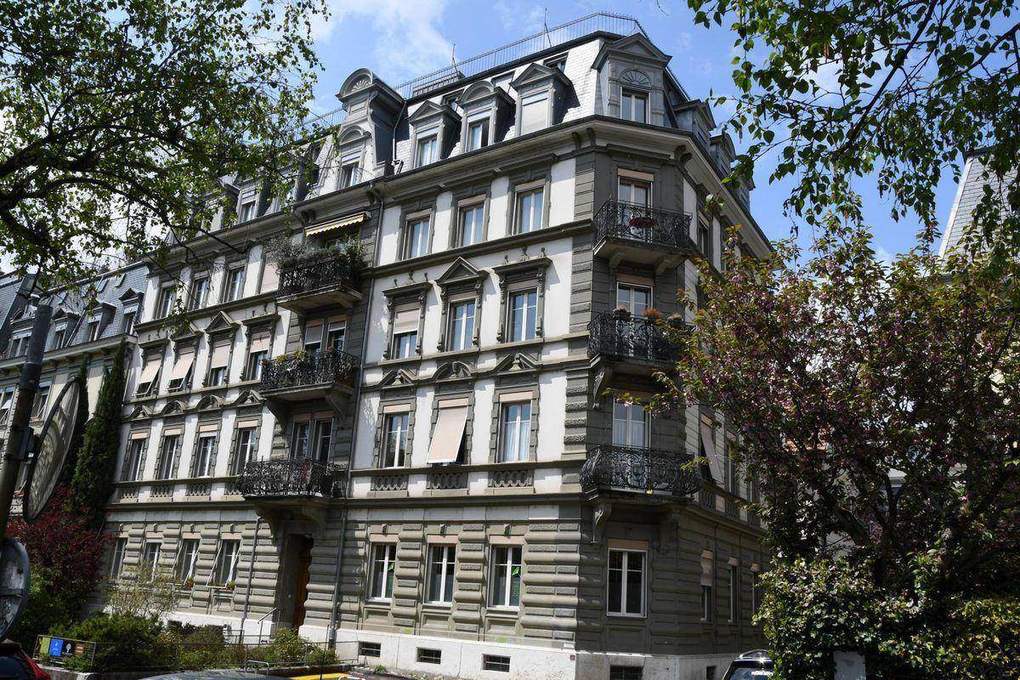
Photo: Andreas59Mathys, CC BY-SA 4.0, via Wikimedia Commons

Want to let your condo unit without friction?
RivieraHost checks in advance what your building’s RAU allows, secures a framework with the manager, then handles short stays, tourist tax and turnover. We simply tell you whether your property is compatible.
Talk about your apartment
10+ years in hospitality. BBA Hospitality (Glion), MSc Tourism (FHGR), MSc Data Science (HSLU).
Also read: Primary or secondary residence for short-term letting? · Running a building as an apart-hotel · How to register your rental · Airbnb tax and VAT · The hidden costs of self-management
Frequently asked questions
Do I need the condominium’s consent to let my unit short-term?
No, by default. A unit owner may use, let or lend their unit without the other owners’ consent, as long as the administration and use regulations (RAU) do not forbid it. This is the essence of strata title.
Can a condominium forbid Airbnb?
Yes. The condominium can, through its RAU adopted at the assembly (in principle by double majority), restrict or forbid short-term letting. The Federal Court upheld such a clause in 2019 (TF 5A_436/2018), in an upmarket residential building.
My RAU is silent on short-term letting: may I let?
Yes, by default — the freedom to use one’s unit prevails without a contrary clause. Stay cautious: an owner can ask for a restrictive clause to be put on the agenda, and an overly intense operation can be deemed contrary to the “housing” purpose. Limit duration and nuisance.
Does the condominium need to give its consent to an owner as it does to a tenant?
No. The owner of a unit does not need the condominium’s consent to let short-term (unless a clause says otherwise), whereas a tenant must obtain their landlord’s consent to sublet even briefly (CC art. 262).
Does the condominium exempt owners from the commune’s rules?
No. Communal and cantonal regulation applies on top: registration and tourist tax (Vaud/Montreux), declaration (Valais), and cantonal limits (e.g. Geneva: a maximum of three months a year). The condominium never replaces these obligations.
Sources
- Swiss Civil Code, strata title (condominium), arts. 712a ff. (purpose of the building, exclusive use, administration regulations) — fedlex.admin.ch
- Federal Court ruling TF 5A_436/2018 of 4 April 2019 — validity of a RAU clause forbidding short-term letting.
- Code of Obligations, art. 262 (subletting by the tenant) — fedlex.admin.ch
- CGI Conseils (Geneva), Anne Hiltpold, “Peut-on interdire Airbnb dans une PPE ?”, February 2020 — cgiconseils.ch
Base yourself in Montreux
RivieraHost’s apartments sit steps from the lake — with kitchens, more space and better value than a hotel for families and groups. Every one is right on this guide’s doorstep.