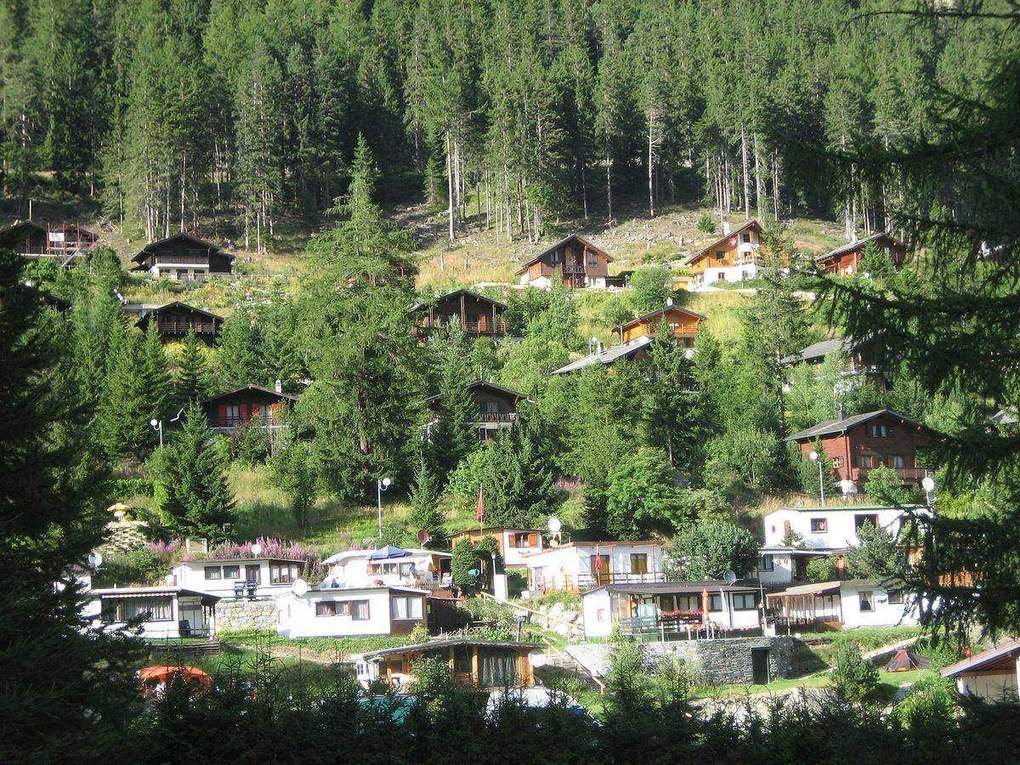
Grindelwald is the highest-volume short-term rental market of the Bernese Oberland village resorts — a place that earns across two seasons, rakes in more bookings per listing than any of its neighbours, and currently faces none of the permit restrictions that have frozen parts of Interlaken's market. In the twelve months to July 2026 the village's supply grew by more than a tenth, night rates kept climbing, and the average active apartment still cleared nearly fifty thousand francs a year.
That combination — strong gross revenue, climbing supply, low regulation — makes Grindelwald the market to watch in the Oberland right now. This guide sets out what a Grindelwald chalet apartment actually earned in the twelve months to July 2026, where the spread between two similar flats comes from, and how the seasonal swing and the tourist taxes fit together. The market figures come from AirROI's Grindelwald dataset (August 2025 to July 2026), converted to Swiss francs at CHF 0.835 per US dollar, the rate we use across our Swiss market guides.
What a Grindelwald short-term rental earns in 2026
The average active listing earned USD 59,865 (about CHF 49,990) across the year, at an average nightly rate of USD 427 (CHF 357) and 48.9% occupancy — USD 202 (CHF 169) of revenue per available night. The market is concentrated and growing: 542 active listings, with supply up 13.4% year on year as owners added units to chase the demand. Guests book on average 104 days ahead — the longest lead in our Oberland markets — and planning ahead is not optional.
The distribution is where the edges live:
| Grindelwald listings, twelve months to July 2026 | Revenue as reported |
|---|---|
| Average listing in the market | CHF 49,990 a year · CHF 357 nightly rate |
| Peak month (August) | ~CHF 8,550 a month · 76.5% occupancy |
| Low-season month (November) | ~CHF 3,205 a month |
| Top 10% of listings | ~CHF 10,190 a month · 86%+ occupancy |
What stands out is the booking behaviour, not just the revenue. A 104-day average lead time tells you that a Grindelwald unit is decided and priced long before the guest arrives — the calendar has to be open three months ahead or the demand goes to the listing that is. That is rare discipline to run on your own, and it is one reason the manager question matters so much in this village.
Why two similar chalets earn different money
Key figure. The average Grindelwald short-term rental earned USD 59,865 (about CHF 49,990) in the twelve months to July 2026, at a nightly rate of USD 427 (CHF 357) and 48.9% occupancy. The top tenth of listings ran at CHF 10,190 a month and 86%+ occupancy. Source: AirROI Grindelwald market dataset, retrieved 2 October 2026.
Two apartments in the same building can differ by more than a factor of two. With supply rising 13.4% and new listings competing for the same guests, the levers that separate the winners are sharper here than in a settled market:
Rate, and the season to set it
Grindelwald earns on the summer hiking season and the winter ski season, but not evenly. The rate you set for the peak months — not the annual average — decides the year, because more of its revenue lands in a few very expensive weeks than in most Swiss markets.
Lead-time discipline
An average 104 days of lead time means the calendar has to be open and priced long before guests start looking. In a market this advance-booked, a late-priced month misses a demand wave that rarely returns.
The listing quality gap
The top 10% command rates above CHF 600 a night while the median sits near CHF 342. That gap is mostly presentation, positioning and a calendar that is never closed — not the property itself.
Turnover economics
The summer high season in particular means tight turnovers, daily changeovers and more laundry per franc of revenue; the units that fold cleaning into the rate rather than under-setting it as an afterthought hold their margins best.
Seasonality: two peaks, one deep trough
Grindelwald is the rare Swiss resort that earns strong money in both summer and winter. The peak month, August, runs to CHF 8,550 and 76.5% occupancy, carried by hiking families and the Jungfrau rail day-trippers staying over. The lowest-revenue month is November — the muddy gap between hiking and ski season — which drops to around CHF 3,205 a month.
Price the peaks separately
The ski-season rate is a different number from the summer rate. Treating every month as one product leaves the strongest weeks chronically underpriced when supply is climbing.
Sell the shoulder, not just the summit
May and October bridge the hills between the two peaks; longer stays and bundled offers are the tools that flatten the November trough.
Plan around the 104-day window
Because guests book so far ahead, the whole season has to be priced in advance. A Grindelwald calendar set a month late underperforms for the entire season — not just that month.
Rules and taxes: light regulation, two guest taxes
Regulation in Grindelwald is comparatively light. There is no residential-zone minimum-stay rule of the kind Interlaken has imposed, and registration requirements are minimal — though a unit's zoning status and any condominium use restrictions remain worth checking before you let. Three things define the financial regime for an owner:
- The local Kurtaxe. Guests pay CHF 4.20 per adult per night (children under 12 stay free, and Berghotels charge CHF 3.20). This is charged on top of the rate and never belongs in the income you quote as an owner.
- The cantonal guest tax. On top of the Kurtaxe, the canton of Bern applies its Beherbergungsabgabe of approximately CHF 1.00 per person per night to short stays, again passed on to the guest.
- Income and VAT. Short-let income is taxable in Switzerland, and VAT can enter once turnover passes the registration threshold — arithmetic we cover in our guide to Airbnb tax and VAT.
The regulatory contrast with the neighbouring Bödeli is the whole story of the Oberland right now: Interlaken froze its residential market in March 2026 while Grindelwald kept supply growing. That window is the opportunity, and it is also the risk — a market this hot draws the permits behind it.
What you keep: fees, cleaning and tax
Gross bookings are not income. On a peak-season month, Airbnb's host service fee — 15.5% under simplified pricing — takes roughly its share before cleaning, laundry, utilities and your mortgage. The cleaning fee normally passes through to the guest rather than coming out of your rate, which is why under-setting it caps what you can ask for a single night. The Kurtaxe and the cantonal Beherbergungsabgabe are charged on top, per guest, and never belong in the income you quote.
Beyond that, short-let income is taxable in Switzerland and VAT can enter the picture once turnover passes the registration threshold; we cover that arithmetic in our guide to Airbnb tax and VAT.
Self-manage, or hand it over
Self-managing in Grindelwald is possible if you live nearby, but it collides with the market's defining trait: a 104-day booking window. That realistically means pricing and holding availability open for an entire season in advance, revisiting rates when supply moves, and turning over beds at tight intervals through the summer peak. Done badly, the cost is higher than in a soft market — a closed calendar in August, or a rate set a month late, is revenue you cannot recover later in the year.
Across our own managed portfolio, professionally operated apartments average around 87% occupancy and roughly 34% more revenue than self-managed flats in the same markets. We work on a flat 20% commission on net booked revenue, licensed apartments only, with 30 days notice on either side — no lock-in, no fee on nights we don't sell.
What could your Grindelwald chalet earn?
Send us the address and the layout. We will project a realistic annual figure at Grindelwald rates, with the seasonal swing, the tourist taxes and the compliance lines shown separately.
Get a free revenue estimate
10+ years in hospitality. BBA Hospitality (Glion), MSc Tourism (FHGR), MSc Data Science (HSLU).
Frequently asked questions
How much can a short-term rental in Grindelwald earn?
The average active listing in the Grindelwald market earned about USD 59,865 (CHF 49,990) in the twelve months to July 2026, at a USD 427 (CHF 357) nightly rate and 48.9% occupancy. The top-earning month (August) reached around CHF 8,550, and the top 10% of listings ran at about CHF 10,190 a month.
Is short-term renting in Grindelwald subject to a minimum-night rule?
Unlike the neighbouring Bödeli market of Interlaken, Grindelwald does not currently impose a residential-zone minimum-stay rule. Regulation is light and registration requirements are minimal, though a unit's zoning status and condominium rules should always be checked before letting.
What tourist taxes do guests pay in Grindelwald?
Guests pay the local Kurtaxe of CHF 4.20 per adult per night (children under 12 free; CHF 3.20 in Berghotels) plus the canton of Bern's Beherbergungsabgabe of approximately CHF 1.00 per person per night, both charged on top of the rate. Neither is part of the owner's quoted income.
How seasonal is the Grindelwald short-term rental market?
Grindelwald earns on both the summer and the ski seasons. The peak month (August) reaches about 76.5% occupancy and CHF 8,550 in revenue, while the low season (around November) drops to roughly CHF 3,205 a month.
What does a manager charge for a Grindelwald apartment?
RivieraHost charges a flat 20% commission on net booked revenue, with 30 days notice on either side and licensed apartments only. Across our own managed portfolio, professionally operated flats average around 87% occupancy and roughly 34% more revenue than self-managed apartments.
Comparing Swiss markets? Our Interlaken owner guide runs the same numbers for the Bödeli market where a three-night minimum and the March 2026 planning zone are the binding constraints, and the owner guides hub collects every market we cover.
Sources: AirROI Grindelwald market dataset, August 2025 to July 2026 (retrieved 2 October 2026); Grindelwald Tourismus, Kurtaxe (CHF 4.20 per adult per night in force since 1 January 2024); Municipality of Grindelwald; Canton of Bern, Beherbergungsabgabe guidance; Airbnb Help Center on hosting in Grindelwald.
Base yourself in Montreux
RivieraHost’s apartments sit steps from the lake — with kitchens, more space and better value than a hotel for families and groups. Every one is right on this guide’s doorstep.