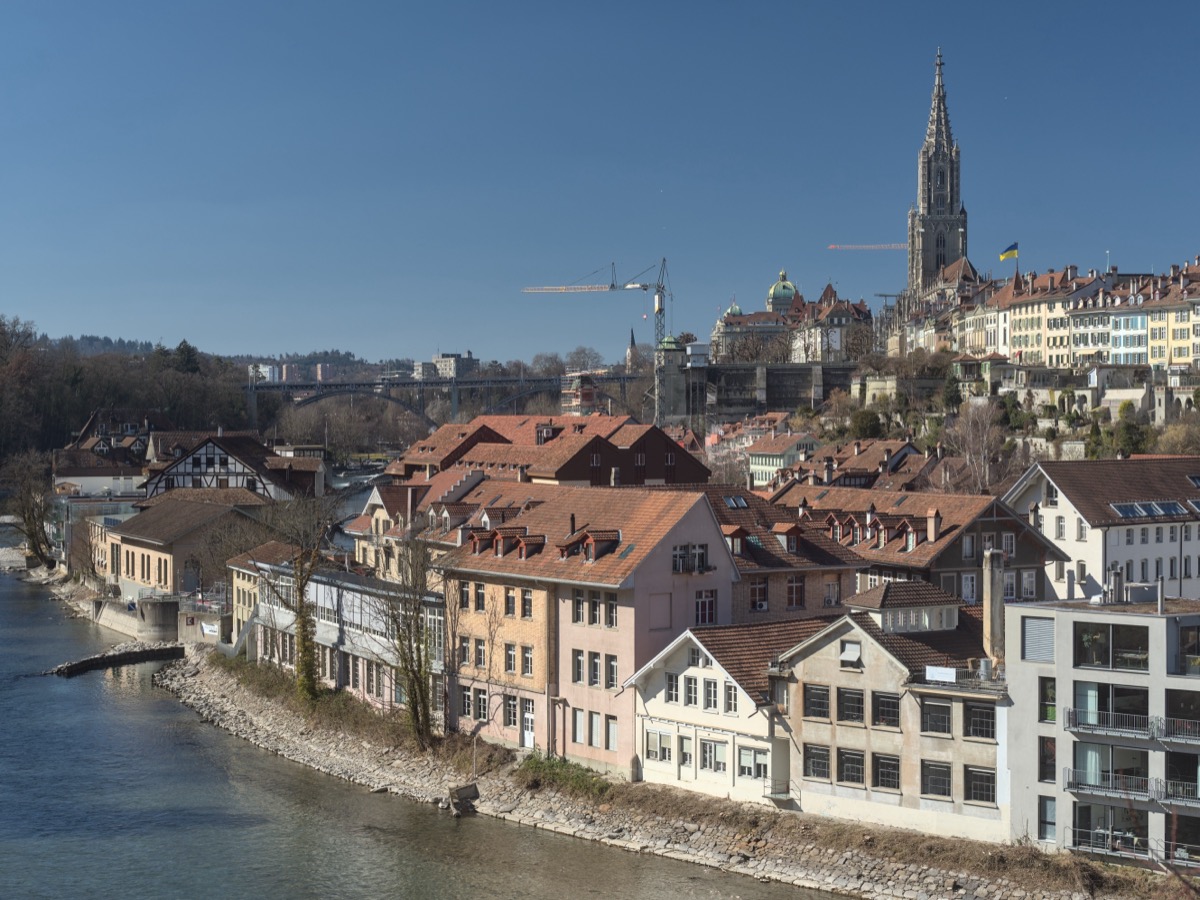
Photo: August Geyler, CC BY-SA 4.0, via Wikimedia Commons (cropped)
.jpg)
Bern is the Swiss city where the distance between a mediocre short let and a properly run one is widest. The market is small — a few hundred active listings — the housing stock is protected, and the rule that actually bites is not the tourist tax but planning law. This guide sets out what a Bern apartment earns in 2026, where the spread between two similar flats comes from, and what compliance costs before you list.
Every market figure below comes from AirROI's Bern dataset for the twelve months to July 2026, converted to Swiss francs at CHF 0.81 per US dollar, the rate we use across our Swiss market guides. They describe a market, not a promise about your address: a flat in the Länggasse and a flat off the Bubenbergplatz are not the same asset.
What a Bern short-term rental earns in 2026
The average listing in the dataset earned USD 19,266 (about CHF 15,605) across the year, at an average nightly rate of USD 189 (CHF 153) and 40.8% occupancy — the equivalent of USD 77 (CHF 62) of revenue per available night. Those are averages across every listing, including a large group that is barely operating at all.
The distribution is the more useful half of the picture:
| Bern listings, twelve months to July 2026 | Revenue as reported |
|---|---|
| Average listing in the market | CHF 15,605 a year · CHF 153 nightly rate |
| Median listing | CHF 1,720 a month · CHF 128 nightly rate |
| Top quarter of listings | around CHF 3,016 a month |
| Top tenth of listings | around CHF 4,342 a month |
Read the first two rows against each other. The average is dragged down by listings that sit empty: 81.7% of listings in the dataset had 181 or more nights still open, which is a polite way of describing a calendar nobody is working. The median listing — the one in the middle of the field — turns over about CHF 1,720 a month. The top tenth turn over roughly 2.5× that. Nothing in the buildings explains that difference.
Why two similar flats earn different money
The gap between the middle of the Bern market and its best tenth is wide, and it is mostly operational. Four things separate the two groups:
Key figure. The average Bern short-term rental earned USD 19,266 (about CHF 15,605) in the twelve months to July 2026, at a nightly rate of USD 189 (CHF 153) and 40.8% occupancy, while the top tenth of listings cleared around USD 5,360 a month (CHF 4,342). Source: AirROI Bern market dataset, retrieved 17 September 2026.
- Rate is set once and never revisited. A flat that keeps last year's price through a Bern summer leaves money on the table in July and still sits empty in February, which is the worst of both.
- Nights are left unopened. A host who blocks the calendar around their own weekends cannot reach the occupancy the top quartile reaches, however good the flat is.
- Lead time is short. The average booking in this market is made about 52 days before arrival, so last-minute discounting punishes exactly the hosts who never set a peak-season price.
- Turnover costs are set too low. The median cleaning fee in the market is USD 64 (CHF 52) and the average USD 96 (CHF 78). Under-charging it looks guest-friendly and quietly destroys your margin on short stays.
Seasonality: a hot July, a cold February
Bern's short-let demand is administrative and conference-driven for most of the year, with a strong summer peak built on city tourism and the Aare. The strongest month in the dataset booked USD 3,842 (about CHF 3,112) at 60.8% occupancy and a USD 215 (CHF 174) nightly rate. The weakest booked USD 1,758 (CHF 1,424) at 30.7% occupancy and USD 164 (CHF 133). That is a 2.2× swing inside one calendar year, in the same flat.
- Price the peak, don't average it. Flattening July into a year-round rate removes most of the upside the top quartile is capturing.
- Give February a different product. Longer mid-term stays, project guests and relocation demand fill the trough that nightly pricing cannot.
- Expect short stays. Bern's minimum-stay settings are low and the market is priced for two-to-three-night bookings, which makes the cleaning fee and the check-in process part of your economics.
The rules: registration, the overnight tax and change of use
Bern's short-let rulebook has three layers, and only one of them is about money.
- Registration and reporting. Anyone letting accommodation commercially registers as an accommodation business (Beherbergungsbetrieb) and reports guest stays. The reporting duty feeds the overnight tax and is not optional for a flat let through a platform.
- The overnight tax. Guests pay an overnight tax (Übernachtungsabgabe) per person per night on top of the room rate. Bern has moved to collecting the tax directly from booking platforms, which removes the collection problem for hosts but not the registration and declaration duty.
- Change of use. This is the real constraint. Letting a dwelling short-term can amount to a change of use (Zweckänderung) that requires a building-law decision, and in the old town the revised Bauordnung is the text that governs it. Vaud's 90-night authorisation rule does not exist in Bern: here the binding question is zoning and use, not a night count.
Practically, that means the permitting question comes before the furnishing question. A written answer from the city on your specific address is worth more than any market forecast.
What you keep: fees, cleaning and tax
Gross bookings are not income. On a median Bern listing at CHF 1,720 a month, Airbnb's host service fee — 15.5% under simplified pricing — takes roughly CHF 267, leaving about CHF 1,453. Against a nightly rate of CHF 128, that is CHF 108 in your pocket per night before cleaning, laundry and utilities.
The cleaning fee is usually charged to the guest, so it normally passes through rather than coming out of your rate — which is exactly why under-setting it hurts. The overnight tax is charged on top, per person, and never belongs in the income you quote to anyone. Beyond that, short-let income is taxable in Switzerland, and VAT can enter the picture once turnover passes the registration threshold; we cover that arithmetic in our guide to Airbnb tax and VAT.
Self-manage, or hand it over
Self-managing in Bern is realistic if you live in the city, keep the calendar open and enjoy the pricing work. It stops being realistic the moment you travel, or the moment the flat is bought as an investment rather than a pied-à-terre: the failure mode is a calendar of 180 open nights and a rate set in 2024.
Across our own managed portfolio, professionally operated apartments average around 87% occupancy and roughly 34% more revenue than self-managed flats in the same markets. We work on a flat 20% commission on net booked revenue, licensed apartments only, with 30 days notice on either side — no lock-in, no fee on nights we don't sell.
What could your Bern apartment earn?
Send us the address and the layout. We will project a realistic annual figure at Bern rates, with the overnight tax and the compliance lines shown separately.
Get a free revenue estimate
10+ years in hospitality. BBA Hospitality (Glion), MSc Tourism (FHGR), MSc Data Science (HSLU).
Frequently asked questions
How much can a short-term rental in Bern earn?
The average listing in the Bern market earned about CHF 15,605 in the twelve months to July 2026, at a CHF 153 nightly rate and 40.8% occupancy. The median listing turned over around CHF 1,720 a month and the top tenth of listings from about CHF 4,342 a month.
Do I need a permit to let my Bern apartment short-term?
Yes, in most cases. Commercially letting accommodation in Bern requires registration as an accommodation business and a reporting duty for guest stays, and letting a dwelling short-term can count as a change of use (Zweckänderung) that needs a building-law decision. Get written confirmation from the city before you commit to a flat or to a platform listing.
Is there a 90-night rule in Bern like the one in Vaud?
No. The 90-night authorisation rule belongs to canton Vaud. In Bern the constraint is planning law: the question is whether short-term letting changes the use of the dwelling, and in the old town the revised Bauordnung is the text that governs it, not a night count.
Who pays the Bern overnight tax?
The guest. The overnight tax (Übernachtungsabgabe) is charged per person per night on top of your rate, and the host registers the accommodation and reports the stays. Bern now collects the tax directly from booking platforms for platform-booked nights, which removes the collection excuse but not the registration duty.
What does a manager charge for a Bern apartment?
RivieraHost charges a flat 20% commission on net booked revenue, with 30 days notice on either side and licensed apartments only. Across our own managed portfolio, professionally operated flats average around 87% occupancy and roughly 34% more revenue than self-managed apartments.
Comparing Swiss markets? Our Lausanne owner guide runs the same numbers for the Vaud side of Lake Geneva.
Sources: AirROI Bern market dataset (retrieved 17 September 2026); Stadt Bern, Übernachtungsabgabe; Bern Welcome, registration of accommodation businesses; Bauordnung der Stadt Bern (old-town revision); Airbnb Help Center on hosting in Switzerland.
Base yourself in Montreux
RivieraHost’s apartments sit steps from the lake — with kitchens, more space and better value than a hotel for families and groups. Every one is right on this guide’s doorstep.