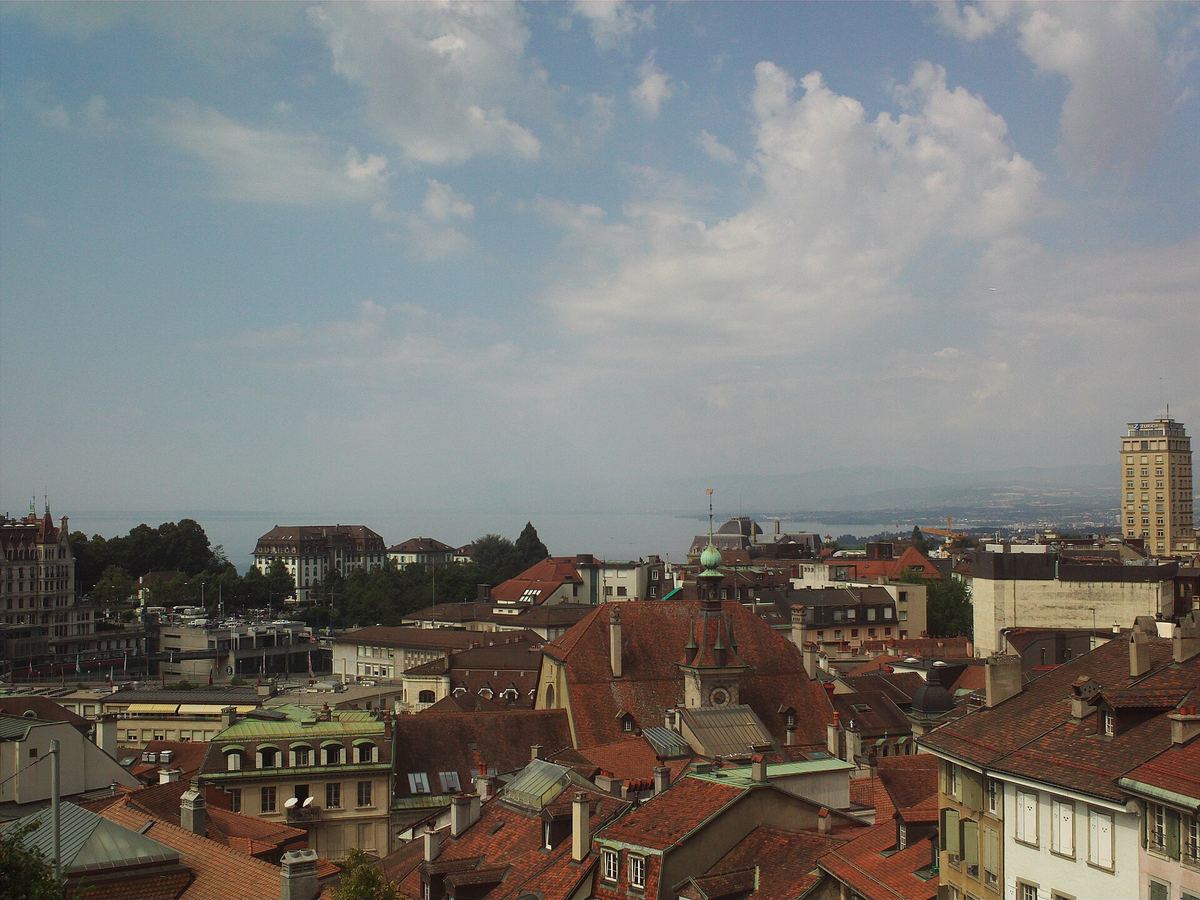
Lausanne is the biggest short-term rental market in canton Vaud: 542 active listings across the twelve months to July 2026, and one of the few Swiss cities where the letting rules are written differently from Geneva's. There is no blanket 90-night ceiling on a Lausanne dwelling. What exists instead is a 90-day threshold that triggers an authorisation for an apartment that used to be let in the traditional way, plus two duties that apply to every host in the canton since 1 July 2022: announce the activity to your commune, and keep a guest register.
This guide sets out what Lausanne apartments actually earned in the twelve months to July 2026, what canton Vaud asks of a host, why the district of Lausanne appears on the 2026 housing-shortage list, what the taxe de séjour costs your guests — and where the revenue upside sits in a market that is neither Geneva nor the Alps.
In this guide
- What a Lausanne short-term rental earns in 2026
- Vaud's rules: announce, register, and the 90-day authorisation
- Why the district of Lausanne is on the 2026 shortage list
- The tourist tax: CHF 3.00 per person per night
- Both levers are open: rate and nights
- Who earns well in Lausanne — and how we would run one
- Frequently asked questions
What a Lausanne short-term rental earns in 2026
The market data for the twelve months to July 2026 is unambiguous about the size of the prize. Across 542 active listings, the average listing turned over USD 13,642 a year at a USD 154 average daily rate and 40.6% occupancy. That average is roughly CHF 11,050 a year, or about CHF 920 a month.
| Lausanne short-term rental market, 12 months to July 2026 | Value |
|---|---|
| Active short-term listings | 542 |
| Average daily rate (ADR) | USD 154 (approx. CHF 125) |
| Occupancy | 40.6% |
| RevPAR (revenue per available night) | USD 61 (median USD 52) |
| Average annual revenue per listing | USD 13,642 (approx. CHF 11,050) |
| Median listing, monthly revenue | USD 1,679 (approx. CHF 1,360) |
| Top 25% of listings, monthly | USD 2,960 and above |
| Top 10% of listings, monthly | USD 4,431 and above |
| Bottom 25% of listings, monthly | USD 755 |
| Occupancy, top quarter / top tenth | 70%+ / 84%+ (market median 44%, bottom quarter 18%) |
| Revenue growth per listing, year on year | −0.6% |
| Typical booking lead time | 42 days |
Two things stand out. First, the spread: the bottom quarter of Lausanne listings bill USD 755 a month and the top quarter USD 2,960 or more — a factor of almost four, in the same city, on the same platform, with the same rules. Second, the direction of travel: revenue per listing slipped 0.6% year on year while supply held steady, which means the average listing is not getting richer. Growth in this market comes from taking share from weaker listings, not from waiting for the market to lift everyone.
The occupancy tiers say the same thing more bluntly. The top tenth of Lausanne listings run at 84% occupancy or better, the top quarter at 70%+, the median around 44% and the bottom quarter at 18%. That gap is operational, not legal: nothing in cantonal law stops an 18%-occupancy flat in Lausanne from filling its calendar.
Vaud's rules: announce, register, and the 90-day authorisation
In canton Vaud, letting a dwelling that was previously let in the traditional way on a hosting platform for more than 90 days in a calendar year requires prior authorisation (art. 15 al. 2 of the cantonal regulation implementing the law on land use planning, RLPPPL). The rule applies in the districts affected by housing shortage — and the district of Lausanne is one of them for 2026. Separately, since 1 July 2022, every host must announce the short-term letting activity to their commune (art. 74c of the cantonal law on accommodation, LEAE), keep a guest register, and appear in the communal register of hosts (art. 74d LEAE).
The Vaud package is recent and it is structured differently from Geneva's flat cap. Four obligations matter in practice:
- Announce before you let. The activity must be declared to the communal authority — communal guidance speaks of announcing at least ten days before the first night, so that the commune can record the host and the flat. This applies whether you let one room or a whole apartment.
- Keep a guest register. Hosts must record the identity of their guests and the precise dates of each stay, and be able to present that register on request. This is a hosting duty, not a platform setting.
- The 90-day authorisation. Beyond 90 days of platform letting in a calendar year, a dwelling that was let the traditional way is treated as a change of use: the activity requires prior authorisation. A compliant, already-authorised furnished tourist accommodation does not fall into that logic the same way — which is why the distinction between “my flat” and “a tourist residence” is the first question any Vaud owner should answer.
- If you are a tenant, you need consent. Under art. 22 of the cantonal regulation on residential leases (RULV), a tenant must obtain the landlord's prior consent to let the dwelling on a platform, and the landlord is expected to answer within 30 days.
Supervision sits with the communes (art. 89 LEAE), and the canton provides them with a monitoring tool built on platform data and refreshed each quarter — which is the practical reason to treat the announcement and register duties as real obligations rather than paperwork. For the full legal walkthrough, including how Vaud's housing-shortage rules are drafted, see our guide Short-term rentals in Villeneuve and canton Vaud: the legal guide.
Why the district of Lausanne is on the 2026 shortage list
The 90-day authorisation rule only bites where Vaud has declared a housing shortage, and the list is revised annually. For 2026 (cantonal order of 17 December 2025), the districts affected are Gros-de-Vaud, Lausanne, Lavaux-Oron, Morges, Ouest lausannois and Riviera-Pays-d'Enhaut, with Broye-Vully, Jura-Nord vaudois and Nyon concerned to a lesser degree; the district of Aigle is not subject to the mechanism at all.
Read that against the market and the intent becomes obvious. AirROI's Lausanne dataset shows 338 of 542 listings offered for more than 271 nights of the year — Lausanne is overwhelmingly a year-round market, not a summer-let market. The rule is aimed at exactly that pattern: a dwelling taken out of the residential stock and run as tourist accommodation twelve months a year.
For an owner, the practical consequences are:
- If your flat was rented to a resident and you now let it short-term, plan for authorisation once the platform nights pass 90 in a calendar year.
- If the property was always run as furnished tourist accommodation and is compliant, the change-of-use question does not arise in the same way. This is a document question as much as a legal one: what does your file show about how the flat was used before?
- Count the nights. The threshold is per calendar year and per dwelling. A host who does not know their running total cannot know when they cross it.
The tourist tax: CHF 3.00 per person per night
Guests in Lausanne pay a taxe de séjour fixed by the intercommunal regulation on the tourist tax (RITS). For apartments, villas, studios and similar accommodation — the category your Lausanne flat falls into — the rate is CHF 3.00 per person per night. One- and two-star hotels, bed & breakfasts and hostels sit at CHF 5.00 and up to CHF 7.00 for the top hotel categories.
Three consequences worth knowing before you price anything:
- It is charged on top of your nightly rate, per person. A couple staying 60 nights generates CHF 360 of tourist tax over the year — money that passes through, not revenue.
- It changes the arithmetic for groups. Four guests pay CHF 12 a night in tax. On a Lausanne flat priced at the market average of CHF 125, the tax is close to 10% of the nightly bill for a group of four.
- It is never part of the income we quote. When we model a Lausanne flat for an owner, the tourist tax is a pass-through line, shown separately from net revenue.
Short-let income is of course taxable in Switzerland, and VAT can come into play depending on turnover and structure. Our companion guide on Airbnb tax and VAT in Montreux walks through the mechanics for a Swiss operator. Platform commission in the region of 15% also sits between gross bookings and what reaches your account — AirROI's figures are gross revenue figures.
Both levers are open: rate and nights
Because Lausanne has no blanket night cap, a compliant flat can sell every night of the year — unlike a capped Geneva dwelling. Annual revenue is therefore two variables: nights sold and nightly rate. At the market's average rate of CHF 125, the average annual revenue of CHF 11,050 corresponds to roughly 88 nights sold — under a quarter of the year.
| The same Lausanne flat, four operating outcomes | Gross bookings a year |
|---|---|
| CHF 125 a night (market average ADR) × 88 nights | CHF 11,050 |
| CHF 125 a night × 150 nights (lift occupancy only) | CHF 18,750 |
| CHF 145 a night × 150 nights (rate and occupancy) | CHF 21,750 |
| CHF 165 a night × 200 nights (positioned and full) | CHF 33,000 |
The distance between the first and last line — CHF 21,950 a year — is not a legal question in Lausanne. It is the difference between a flat that is listed and a flat that is operated. What the data suggests about how to close it:
- Seasonality is real but moderate. AirROI flags May as the strongest revenue month and July as the softest, with average nightly rates peaking in July and dipping in August. A 42-day booking lead time means most revenue is decided about six weeks out — so pricing windows matter more than long-range guesswork.
- Entire homes dominate, and most compete on short stays. Entire-home listings make up 69.4% of Lausanne supply, and a large share of them accept one-night bookings. Competing for one-nighters in a city with a 42-day lead time is expensive: minimum-stay rules that push two- and three-night stays protect your rate.
- Location carries the market. AirROI's neighbourhood analysis for Lausanne points to Ouchy, the city centre and Epalinges as the strongest areas, each with a different guest profile — lakeside leisure, business travellers, and the university and hospital corridor.
- Turnover costs are visible to guests. The median cleaning fee in the market is USD 74 (around CHF 60). A cleaning fee well above the market reads as a penalty on short stays, and it is the first thing a guest compares.
- The demand mix is not leisure-only. Lausanne's market is driven by business travel, university and hospital visitors, relocations and family visits as much as by tourism — which is why the top quarter of listings sustain 70%+ occupancy without a summer peak to carry them.
Who earns well in Lausanne — and how we would run one
Lausanne rewards a specific kind of owner: one to three well-located flats, run year-round, sold to guests who are coming for work, study or family rather than a two-week holiday. The owners at the top of the market share a recognisable profile: they know their night count against the 90-day threshold, their announcement and register duties are done properly, and their calendar is managed rather than filled.
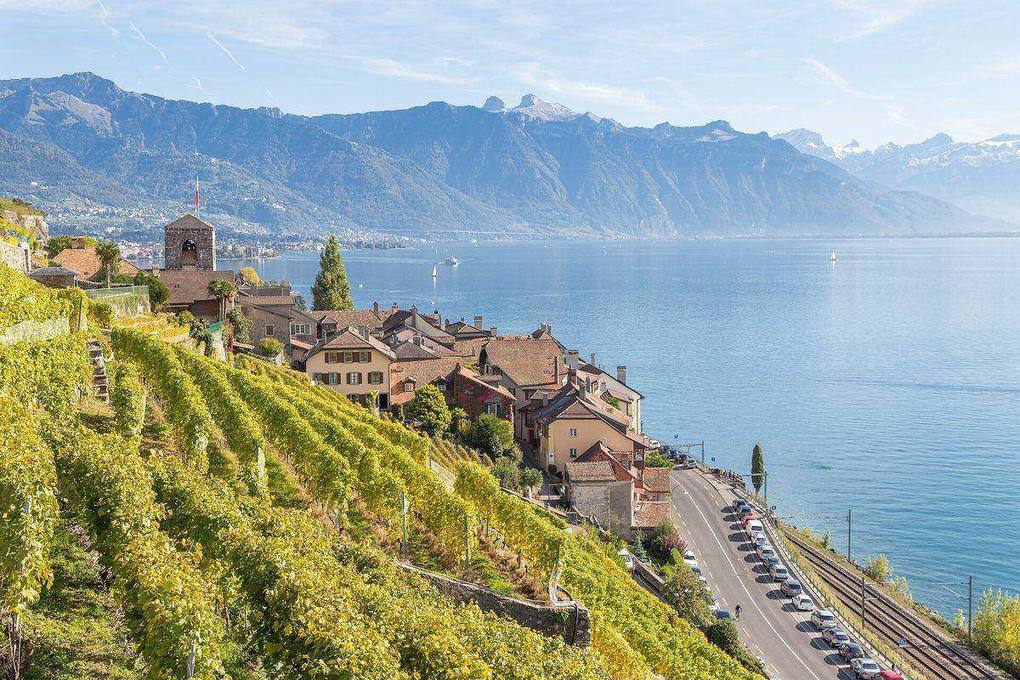
Photo: JoachimKohler-HB, CC BY-SA 4.0, via Wikimedia Commons

- Announce the activity to the commune and keep the guest register from day one — not after a request.
- Know your running night count for the calendar year, per dwelling, so the 90-day threshold is never crossed by accident.
- Set minimum stays that fit a 42-day lead time instead of competing for one-night bookings.
- Price to the neighbourhood, not the city: Ouchy, the centre and Epalinges behave differently.
- Keep the cleaning fee in line with the market median and let the quality of the flat carry the rate.
- If you rent rather than own, get the landlord's written consent before the first booking.
Across our own managed portfolio we see professionally operated apartments average around 87% occupancy and roughly 34% more revenue than comparable self-managed listings, for a flat 20% commission that covers pricing, marketing, guest vetting, cleaning coordination and compliance paperwork — with 30 days' notice if an owner wants the keys back. In Lausanne, where the median listing runs at 40.6% occupancy, that operational gap is the whole opportunity. You can see how that works in practice on our Vaud Airbnb management service page.
What could your Lausanne apartment earn?
Send us the address and the layout. We will project a realistic annual figure at Lausanne rates, with the tourist tax and the Vaud compliance lines shown separately.
Get a free revenue estimate
10+ years in hospitality. BBA Hospitality (Glion), MSc Tourism (FHGR), MSc Data Science (HSLU).
Frequently asked questions
How much can a short-term rental in Lausanne earn?
Around USD 13,642 a year on average per listing in the twelve months to July 2026 — approximately CHF 11,050 — at a USD 154 average nightly rate and 40.6% occupancy. The median listing bills about USD 1,679 a month, the top quarter USD 2,960 or more and the top tenth USD 4,431 or more. At the market average rate of CHF 125, that average revenue corresponds to roughly 88 nights sold a year.
Do I need a permit to rent my Lausanne apartment short-term?
Every host in canton Vaud must announce the activity to their commune and keep a guest register (art. 74c and 74d LEAE, in force since 1 July 2022). In addition, letting a dwelling that was previously let in the traditional way on a platform for more than 90 days in a calendar year requires prior authorisation as a change of use (art. 15 al. 2 RLPPPL) — and the district of Lausanne is affected by the housing-shortage declaration for 2026.
Is there a 90-night rule in Lausanne like the one in Geneva?
Not in the same form. Geneva caps platform letting of a dwelling at 90 nights a year outright. Vaud's rule is a threshold, not a ban: past 90 days of platform letting in a calendar year, a dwelling that was let the traditional way requires prior authorisation in a district affected by housing shortage. An apartment always operated as compliant furnished tourist accommodation is not treated the same way, and there is no absolute ceiling on nights for a compliant, authorised operation.
How much is the taxe de séjour in Lausanne and who pays it?
CHF 3.00 per person per night for apartments, villas, studios and similar accommodation, set by the intercommunal regulation on the tourist tax. Hotel categories and B&Bs sit at CHF 5.00 and above. It is charged to the guest on top of the nightly rate and is a pass-through, not rental revenue.
Can I sublet my rented flat on Airbnb in Lausanne?
Only with the landlord's prior consent. Under art. 22 RULV, a tenant who wants to let the dwelling on a hosting platform must obtain that consent, and the landlord is expected to respond within 30 days. Letting without it exposes the tenant to termination of the lease.
Related reading: Short-term rentals in Villeneuve and canton Vaud: the legal guide · Short-term rental income in Geneva in 2026 · Airbnb tax & VAT in Montreux · All owner guides
Sources: AirROI Lausanne short-term rental dataset, twelve months from August 2025 to July 2026 (retrieved 16 September 2026); Ville de Lausanne, tariff of the taxe de séjour under the intercommunal regulation (RITS); Canton de Vaud, informations relatives aux locations de type Airbnb (LEAE art. 74c–74d and 89, RLPPPL art. 15 al. 2, RULV art. 22) and cantonal order of 17 December 2025 on districts affected by housing shortage. Currency conversions use approximately CHF 0.81 per USD. This guide is market analysis, not legal or tax advice.
Base yourself in Montreux
RivieraHost’s apartments sit steps from the lake — with kitchens, more space and better value than a hotel for families and groups. Every one is right on this guide’s doorstep.