If you are shopping for a chalet or apartment in Verbier, Crans-Montana, Zermatt, Gstaad or the Engadin with Airbnb income in mind, there is a federal law that decides what you are allowed to buy before any canton or commune gets involved: the Federal Act on Secondary Residences (LRS), universally known by the name of the activist who pushed the 2012 popular initiative behind it — Lex Weber.[1]
Unlike Lex Koller, which only concerns foreign buyers, Lex Weber applies to every buyer, Swiss or foreign. It does not touch your right to purchase an existing chalet — it touches what can legally be built, and in which communes, and that distinction is exactly where investors get caught out.
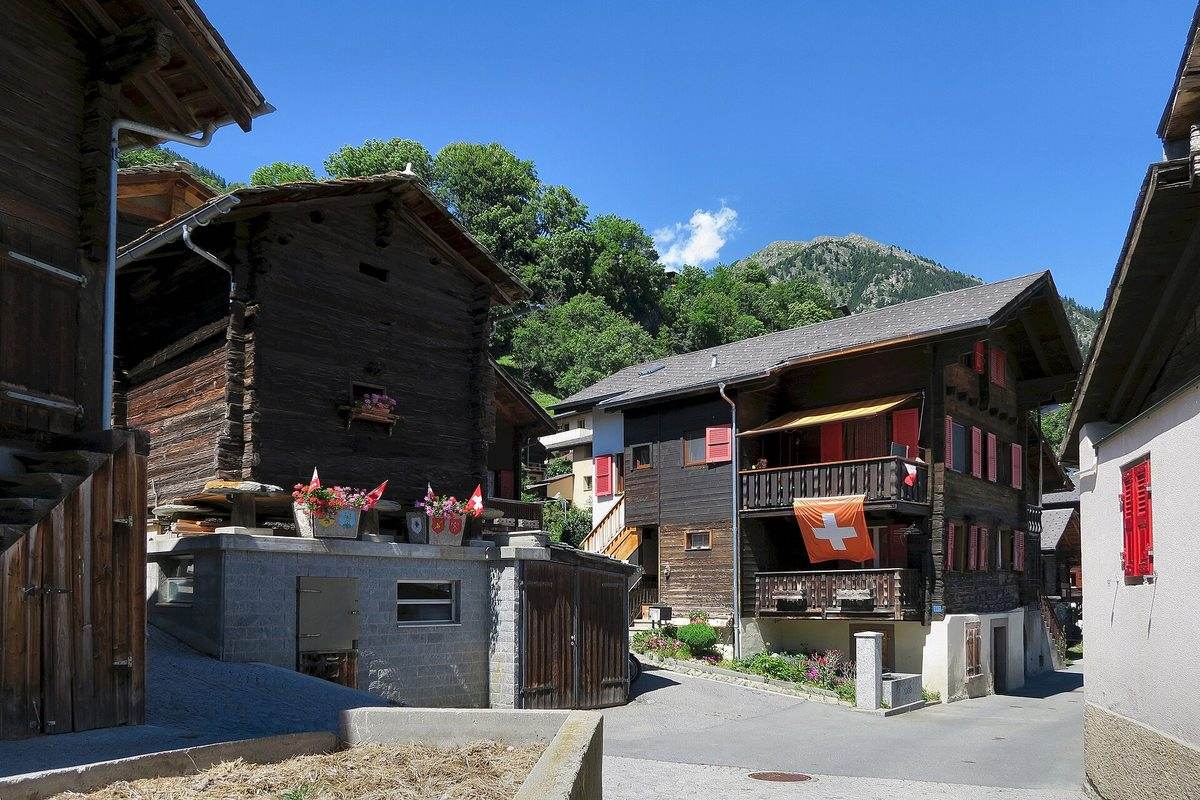
Photo: Kecko, CC BY 2.0, via Wikimedia Commons
Key points: as of the Federal Office for Spatial Development's (ARE) 31 March 2026 assessment, 331 Swiss communes — mostly in the Alps — have more than 20% secondary residences in their housing stock, and are barred from authorising new ones.[2] In those communes, new housing may only be built as a primary residence or as a genuine tourist-accommodation unit let on market terms to a changing clientele.[3] Existing pre-2012 chalets are unaffected — you can still buy, renovate and let one short-term.
⚠️ This is general information, not legal or tax advice. Verify the current secondary-residence share of the specific commune with the ARE or the commune itself before signing anything, and confirm the usage restriction (if any) already noted against the property in the land register.
In short: Lex Weber (LRS) bans new secondary residences in the 331 Swiss communes — mostly Alpine resorts — where they already exceed 20% of housing. It restricts new construction, not the short-term letting of an existing dwelling bought and built before 11 March 2012.
In this guide
What Lex Weber actually restricts
On 11 March 2012, 50.6% of Swiss voters approved Franz Weber's popular initiative "to end the uncontrolled spread of secondary residences." The Federal Act on Secondary Residences (LRS, SR 702) that implemented it entered into force on 1 January 2016. Article 1 defines its scope precisely: it governs "the construction of new dwellings as well as the modification of existing dwellings and their use, in communes where the proportion of secondary residences exceeds 20%."[4]
Article 6 is the operative rule: in any commune where the secondary-residence share — as determined annually by the federal authorities from the commune's own housing inventory — exceeds 20%, no new secondary residence may be authorised. If a commune sits just under 20%, a building permit that would push it over the line is also refused.[5] This is a federal-level construction and zoning restriction, layered on top of (not instead of) each canton's own short-term rental registration rules — the kind our Valais vs. Vaud registration guide and Montreux registration guide walk through separately.
How many communes are affected, and where
The number moves slightly every year as communes update their housing inventories. The ARE's most recent nationwide count, published 31 March 2026, put the figure at 331 communes above the 20% threshold — nearly all of them in the Alps — down from 337 a year earlier.[2] The reduction came mainly from commune mergers and from updated building-register data pushing a handful of communes back under the line; in the same assessment, nine communes crossed above 20% for the first time, including Céligny (GE), Mauraz (VD) and several in Grisons and Ticino.
In practice, the capped communes concentrate heavily in Valais, Graubunden (Engadin, Davos), Ticino and the Bernese Oberland — exactly the regions where our readers are weighing Verbier, Crans-Montana and Zermatt chalet income or a St. Moritz / Engadin property. If you're negotiating on a specific address, the commune's current secondary-residence share is public via the ARE's housing-inventory data — ask the notary or the commune's building office to confirm it before you sign a preliminary purchase agreement.
Buying existing vs. building new
This is the distinction that actually matters for an Airbnb-income buyer, and it is widely misunderstood: Lex Weber does not touch what you can do with a dwelling that already existed before the law's cut-off date.
- A "dwelling created under the old law" — built and lawfully authorised, or holding a final building permit, before 11 March 2012 — can be bought, resold, renovated, demolished-and-rebuilt and let short-term with no new usage restriction imposed, and its usable floor area can even be expanded by up to 30% of its 2012 size.[6] This covers the overwhelming majority of existing chalets and apartments for sale in Verbier, Crans-Montana or Zermatt today.
- A brand-new dwelling in a capped commune can only be authorised if it is used as a primary residence, a dwelling treated as equivalent to one (e.g. staff housing), or a qualifying tourist-accommodation unit (see below). The building permit comes with a formal usage restriction entered in the land register — this is not optional and it runs with the property, not with the owner.[3]
What this means for you: if your target property was already standing (or had a final permit) before March 2012, the Lex Weber quota is essentially a non-issue for your purchase — you inherit no new restriction. If you are instead looking at a new-build development or an off-plan unit in a capped resort commune, ask the developer to show you the exact usage restriction registered on the title before you commit a deposit.
The tourist-accommodation exception
Lex Weber is not a blanket ban on new tourism housing — article 7 explicitly carves out dwellings "placed durably at the disposal of guests for short stays, on usual market terms and consistent with local practice," provided at least one of two further conditions is met: the unit sits in the same building as the owner's own primary residence, or it is not fitted out for the owner's personal use and is marketed through an organised accommodation establishment.[3] Separately, article 8 lets hospitality operators build unrestricted units attached to a hotel or residence operation, within set floor-area ratios, if the rental income is reinvested in running the establishment.
In practice, this exception is what underpins most new "apart-hotel" or branded-residence developments you will see marketed in capped Alpine resorts — the developer accepts the market-letting restriction (and a land-register mention) in exchange for the right to build at all. It is a materially different ownership product from a freehold chalet, and worth reading the usage-restriction clause of any purchase contract carefully before assuming you can simply "leave it empty when I visit."
How this stacks with Lex Koller
Buyers researching this topic often conflate Lex Weber with Lex Koller, the separate federal law restricting property purchases by people domiciled abroad. They answer different questions and both can apply to the same transaction:
| Question | Lex Koller | Lex Weber (LRS) |
|---|---|---|
| What it governs | Who may buy | What may be built / how it may be used |
| Who it applies to | Buyers domiciled abroad (non-EU/EFTA residents face the tightest limits) | Every buyer, Swiss or foreign, in capped communes |
| Annual limit nationwide | Roughly 1,500 authorisations/year across all cantons for holiday-home purchases by foreign buyers | No numeric cap — a binary ban on new secondary residences above 20% |
| Applies to existing pre-2012 chalets? | Yes, authorisation is still required for a foreign buyer | No restriction — buy and let freely |
A non-resident foreign buyer purchasing an existing pre-2012 chalet in a capped Valais commune therefore needs to clear the Lex Koller authorisation gate, but faces no Lex Weber restriction on the purchase itself, because the dwelling already exists. Flip it around — a Swiss-resident buyer eyeing a new-build unit in the same commune clears Lex Koller automatically but runs straight into the Lex Weber usage restriction on the new unit.
Due-diligence checklist before you buy
- Confirm the commune's current secondary-residence share with the ARE or the commune's building office — it is reassessed every year and can cross 20% in either direction.
- Ask the notary to confirm the building permit date: before or after 11 March 2012 changes everything about what restrictions, if any, apply.
- Request the exact wording of any usage restriction mentioned in the land register (Grundbuch/registre foncier) — a tourist-accommodation restriction can limit who you may let to and how.
- If buying from abroad, run the Lex Koller check in parallel — it is a separate authorisation with its own cantonal quota and timeline.
- Once you own the property, treat the cantonal short-term rental registration (declaration, permit, tourist tax, guest register) as a distinct, separate step — Lex Weber is about the building, not the booking.
In practice at RivieraHost: once your purchase clears, we handle cantonal registration, tourist tax, pricing and guest turnaround end-to-end — in Montreux and across the Valais and Bernese resort markets covered in our chalet income guide.
Already own, or about to buy, a Swiss chalet?
Get a free, no-obligation revenue estimate for your property before you commit — occupancy, seasonal pricing, and what flat 20% commission management actually nets you.
Get your free revenue estimate
10+ years in hospitality. BBA Hospitality (Glion), MSc Tourism (FHGR), MSc Data Science (HSLU).
Also read: Lex Koller for foreign buyers · Verbier, Crans-Montana, Zermatt chalet income · Short-term rental registration: Valais vs. Vaud · Buying an apartment to rent short-term
Frequently asked questions
What is Lex Weber?
Lex Weber is the popular name for the Federal Act on Secondary Residences (LRS, SR 702), approved by Swiss voters in 2012 and in force since 1 January 2016. It bans new secondary residences in communes where they already exceed 20% of the housing stock.
How many Swiss communes are affected by the 20% quota?
331 communes exceeded the 20% secondary-residence threshold as of the Federal Office for Spatial Development's (ARE) assessment published 31 March 2026, down from 337 a year earlier. Most are in the Alps, concentrated in Valais, Graubunden, Ticino and the Bernese Oberland.
Can I still buy an existing chalet to rent on Airbnb in a capped commune?
Yes. The LRS restricts new construction of secondary residences, not the tourist letting of an existing dwelling. A chalet built and authorised before 11 March 2012 can be bought, renovated and let short-term freely, subject to each canton's own registration rules.
Can a new chalet in a capped commune ever be built as an investment property?
Only if it is built and used as a dedicated tourist-accommodation unit under article 7 LRS: let on market terms to a changing clientele, carrying a usage restriction entered in the land register, and in most cases either attached to a managed hospitality operation or not fitted out for the owner's personal use.
Does Lex Weber apply on top of Lex Koller for foreign buyers?
Yes, the two laws stack and answer different questions. Lex Koller (foreign-buyer authorisation, roughly 1,500 permits a year nationwide) governs who can buy; Lex Weber (LRS) governs what can be built and how it may be used once bought, regardless of the buyer's nationality.
Sources
- Federal Office for Spatial Development (ARE), "Résidences secondaires" overview page, retrieved 21 November 2026 — are.admin.ch
- ARE press release, "Part de résidences secondaires supérieure à 20%: peu de nouvelles communes concernées," 31 March 2026 — are.admin.ch
- Federal Act on Secondary Residences (LRS), SR 702, articles 7 and 8 — fedlex.admin.ch
- Federal Act on Secondary Residences (LRS), SR 702, article 1 (scope) — fedlex.admin.ch
- Federal Act on Secondary Residences (LRS), SR 702, article 6 (construction ban above 20%) — fedlex.admin.ch
- Federal Act on Secondary Residences (LRS), SR 702, article 11 al. 2 (30% expansion of pre-2012 dwellings) — fedlex.admin.ch
Base yourself in Montreux
RivieraHost’s apartments sit steps from the lake — with kitchens, more space and better value than a hotel for families and groups. Every one is right on this guide’s doorstep.