Indoor cameras and recording devices are banned in every Airbnb listing, even switched off. Outdoor cameras and noise decibel monitors are allowed only if they are disclosed and pointed exclusively at your own property. Separately, Swiss data protection law treats your guest register as personal data, and the foreigners act requires you to report every paying foreign guest to the canton. Compliance is a two-front job, and both fronts are auditable.
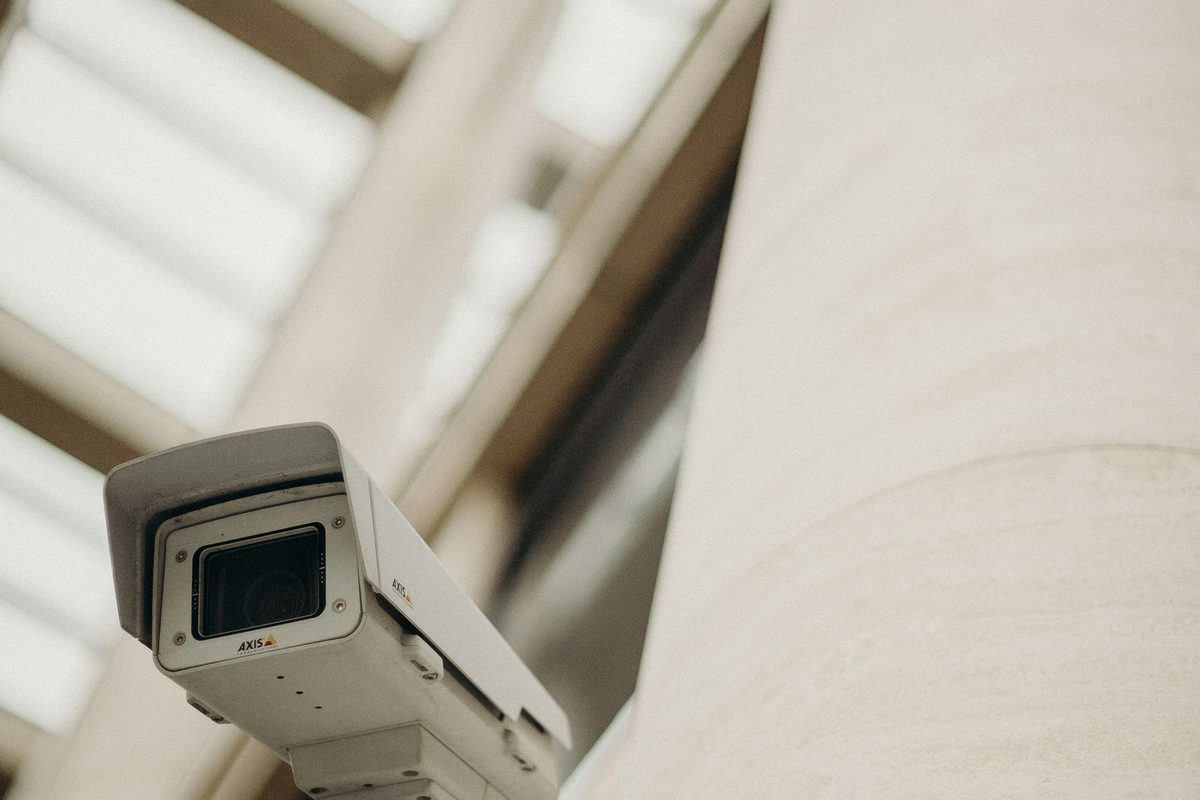
Photo: Pexels
On this page
What Airbnb allows and what it bans
Airbnb rewrote its in-home device policy in April 2024 and the wording is deliberately absolute about interiors: hosts are not allowed to have security cameras and recording devices that monitor any part of a home's interior, such as the hallway, bedroom, bathroom, living room or guest house, even if they're turned off or disconnected[3]. Hidden cameras have always been prohibited outright and remain so. The current rules took effect on 30 April 2024[3].
Exterior cameras, noise decibel monitors and smart-home devices stay permitted provided they comply with the guidelines and with applicable law — which is where Swiss law takes over.
| Device | Airbnb position | What else you must do |
|---|---|---|
| Indoor camera or audio recorder | Prohibited, even switched off or disconnected | Remove it before the listing goes live |
| Outdoor camera | Allowed if disclosed | Own property only; no pavement, stairwell or neighbour's land; inform guests before they enter the field of view |
| Noise decibel monitor | Allowed if disclosed | Levels only — no audio recording; keep retention minimal |
| Smart lock, doorbell camera, energy meter | Allowed if disclosed | Disclose the data you capture and why |
Swiss data protection law applies to every booking
The moment you collect a guest's name, ID details, phone number or payment data, you are processing personal data under the revised Federal Act on Data Protection. The law states that personal data must be processed lawfully, that the processing must be carried out in good faith and be proportionate[1]. Proportionate is the operative word: a camera that films more than the purpose requires is not proportionate, whatever its legal justification.
Three further obligations land directly on a host. You must inform the guest, in an appropriate manner, when you collect their personal data[1] — for a short-term rental that means a line in the booking confirmation or the check-in message explaining what you collect and why. Data must be destroyed or anonymised as soon as it is no longer required for the purpose of processing[1]. And any guest may request information from you on whether personal data relating to them is being processed[1], which is why you need to know where that data actually sits: a spreadsheet, a channel manager, a notes app on a phone, a paper register.
The two sentences that decide most camera disputes. Swiss law requires the processing of personal data to be proportionate[1], and the federal data protection commissioner's guidance for private video surveillance says the recording area must be limited to the operator's own property, that neither the neighbouring property nor the public space may be recorded, and that the persons concerned must be informed that they are being filmed before they enter the camera's recording area[2]. A camera aimed at the shared corridor of a Montreux apartment building fails on all three counts at once.
The registration duty and the guest data you keep
Switzerland's guest-registration obligation is older than any platform rule and does not depend on Airbnb. The Foreign Nationals and Integration Act provides that anyone who accommodates a foreign national for payment must declare this to the competent cantonal authority[5], and the implementing ordinance requires the accommodation provider to complete a registration form (Meldeschein) with the details from the guest's identity document, have the guest sign it, and transmit it to the competent cantonal authority[6].
Airbnb's own responsible-hosting guidance for Switzerland confirms the split: the reporting requirement comes from the canton's hospitality law or from a request by the competent authority, some cantons accept guest-registration information through an electronic form, and if you decide to keep a guest directory you must comply with all applicable data protection laws including the Federal Swiss Act on Data Protection, protect your guests' data from access by third parties and process it only to fulfil the duties of the Swiss reporting system[4].
The practical consequence is a retention rule. Registration data exists to satisfy a legal duty; once that duty is discharged and any tax or taxe-de-séjour obligations are settled, keeping the file "just in case" is the exposure, not the safety net.
Entrance cameras and the proportionality test
A door camera is the device owners ask about most, and it is where the two rulebooks overlap hardest. Airbnb permits an exterior camera that is disclosed. Swiss law permits it only within the limits above — your own property, no public space, no neighbour's land, guests informed in advance[2] — and retention must stay as short as the purpose allows; for private video surveillance the commissioner's guidance puts the usual figure at 24 hours[2].
Two design choices keep a camera on the right side of that line. Aim it at your own entrance door and the threshold, not at the stairwell, the lift lobby or the pavement. And set the recorder to overwrite on a short cycle instead of archiving months of footage, because stored images nobody needs are exactly what the retention principle targets[1].
If your flat sits in a condominium, the building itself usually has a say before the canton does — see short-term rentals in a Swiss condominium (PPE) for how the rules of the co-ownership and the administrator's position interact with your own compliance duties.
A compliance routine you can actually run
None of this requires a lawyer on retainer. It requires a set of decisions taken once and then verified at every changeover.
- Walk the flat with the listing photos and identify every device that records video, images or audio. Anything indoors comes out.
- For each outdoor device, check the field of view against the property boundary. If it captures the corridor or the street, reposition it.
- Add one disclosure paragraph to the listing and to the check-in message: what is monitored, where, why, and for how long the footage is kept.
- Write down your retention periods — footage, registration forms, ID copies. Delete on schedule rather than by memory.
- Keep the guest register for the reporting duty only; restrict who can open it, and remove third-party access.
- Register the apartment with the commune and handle the taxe de séjour — the compliance chain is described in registering a short-term rental in Montreux.
- Check that your policy covers short-term letting and any monitoring equipment, per insurance for a Montreux short-term rental.
Why this is a revenue question, not only a legal one
Guest-data and camera failures are quiet revenue leaks. A listing that cannot disclose what it monitors gets reported, and a reported listing loses visibility exactly when occupancy matters. Beyond the platform, a data subject who cannot get an answer to a request for information[1] turns a housekeeping question into a dispute with an authority in it.
Owners who hand the detail to a manager get the opposite effect: disclosures written once into every listing and every check-in message, footage retention on a schedule rather than on goodwill, registration and taxe de séjour filed on time, and a staff member who answers a guest's data request the same day. That is the boring half of the work, and it is the half that protects the occupancy you spent the season building. If you want to see what your apartment earns once the operational drag is removed, start with a revenue estimate.
Can I install a camera inside my Montreux apartment to check occupancy?
No. Airbnb prohibits hosts from having security cameras and recording devices that monitor any part of a home's interior, including the hallway and living room, even if the devices are turned off or disconnected[3]. Occupancy is tracked through the booking, the door lock and the cleaning report — not through an interior camera.
Are outdoor cameras and noise monitors allowed?
Yes, with conditions. Airbnb allows exterior cameras, noise decibel monitors and smart devices when they are disclosed and comply with the guidelines and applicable law. Swiss law adds that the recording area must be limited to your own property, that neither neighbouring property nor public space may be recorded, and that people must be informed before they enter the camera's field of view[2]. Noise monitors measure levels — they must not record audio.
How long may I keep guest data and video footage?
Only as long as the purpose requires. The law says personal data must be destroyed or anonymised as soon as it is no longer required for the purpose of processing[1], and for private video surveillance the data protection commissioner's guidance puts the usual retention at 24 hours[2]. Registration records are kept to satisfy the reporting duty, not indefinitely.
Do I have to declare foreign guests to the canton?
Yes. Anyone who accommodates a foreign national for payment must declare it to the competent cantonal authority[5], and the implementing ordinance requires a registration form filled in from the guest's identity document, signed by the guest and transmitted to that authority[6]. Airbnb's Swiss guidance confirms the duty and adds that any guest directory must comply with data protection law and be protected from third-party access[4].
Does a guest have the right to ask what data I hold about them?
Yes. Any person may request information from the controller on whether personal data relating to them is being processed[1]. In practice, that means being able to find a past guest's record quickly and to explain what you hold and why.

Bahram Khanlarov
10+ years in hospitality. BBA Hospitality (Glion), MSc Tourism (FHGR), MSc Data Science (HSLU).
Want the compliance handled with the bookings?
RivieraHost manages licensed apartments in Montreux and the Swiss Riviera on a flat 20% commission — no setup fees. Disclosures, guest registration, taxe de séjour and changeover oversight, in one place.
Get a free revenue estimateSources
- Fedlex, Federal Act on Data Protection (FADP), English text — good faith and proportionality; duty to inform on collection (including data not collected from the data subject); destruction or anonymisation once data is no longer required; right to information. Consulted 23 October 2026.
- Federal Data Protection and Information Commissioner (FDPIC/EDÖB), Video surveillance by private individuals — obligations for private operators: recording limited to own property, no neighbouring property or public space, retention only as long as needed (usually 24 hours), and advance information for persons entering the recording area. Consulted 23 October 2026.
- Airbnb Help Center, Security cameras and recording devices — interior monitoring prohibited even when devices are off or disconnected; hidden cameras always prohibited; exterior cameras, noise decibel monitors and smart devices permitted subject to the guidelines and applicable law; rules effective 30 April 2024. Consulted 23 October 2026.
- Airbnb Help Center, Responsible hosting in Switzerland — guest registration under cantonal hospitality law or on request of the competent authority; electronic reporting in some cantons; guest directories must comply with Swiss data protection law, be protected from third-party access and be processed only to fulfil the reporting system's duties. Consulted 23 October 2026.
- Fedlex, Loi sur les étrangers et l'intégration (LEI), art. 16 (French original) — Celui qui loge un étranger à titre lucratif doit le déclarer à l'autorité cantonale compétente. Consulted 23 October 2026.
- Fedlex, Verordnung über Zulassung, Aufenthalt und Erwerbstätigkeit (VZAE), Art. 18 (German original) — obligation to complete and have the guest sign a registration form (Meldeschein) from identity-document details and transmit it to the competent cantonal authority. Consulted 23 October 2026.
General information on camera, guest-data and registration duties for short-term rental owners, not legal advice. Platform terms, cantonal practice and your own building's rules govern your case.