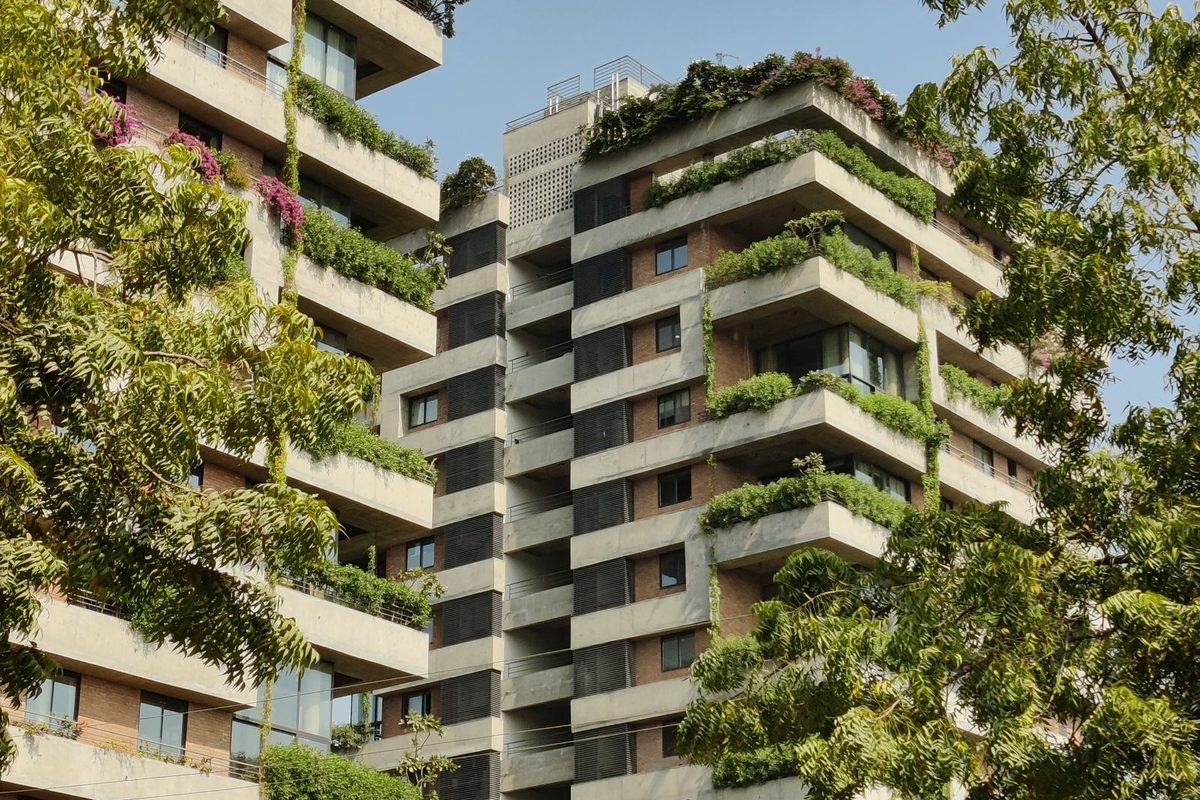
Photo: Pexels
Most short-term rentals in Switzerland are not closed down by an inspector who goes looking for them. They are closed down by a neighbour who has had enough — and what follows is private law, not a licensing round. Two articles of the Swiss Civil Code decide the outcome of most of these cases, and almost no owner reads them before the first complaint arrives.
This guide covers what Swiss law actually requires when you let a flat short-term, who the neighbour can act against, and the small number of measures that keep a disagreement on the landing instead of in front of a conciliation authority. It is general information, not legal advice: for a live dispute, the person to call is a Swiss lawyer or the commune’s own service.
The short answer. Under art. 684 of the Civil Code an owner must refrain from any excess that is detrimental to neighbouring property — and noise is named in the article itself.[1] Under art. 679 a neighbour who suffers damage, or faces it, can sue for abatement, for protective measures and for damages, and that action runs against the owner of the flat, not against the guest.[2] Your guest owes a legal duty of consideration to the other people in the building and to the neighbours[3] — which is why the house rules you impose are the piece of paper that matters.
What the law actually requires of you
Art. 684 (1) of the Civil Code sets the general standard. In the official English text:
“In exercising their ownership rights, including in particular the right to run a business on his or her land, landowners are obliged to refrain from any excess detrimental to neighbouring properties.” — Art. 684 (1) CC[1]
Paragraph 2 of the same article removes any doubt about what an “excess” can be: air pollution, noxious vapours, noise, vibrations, radiation, and the deprivation of light, where those harmful effects go beyond the tolerance neighbours owe each other given the location, the character of the property and local custom.[1] Two consequences matter for a rental flat. First, the standard is a threshold of tolerance, not silence: a building next to a railway line is judged differently from a quiet residential street, and the tolerance is lower at night than at midday. Second, the excess does not have to be repeated for a year to be actionable — a short-term let that produces noise above the local tolerance can be enough.
The remedy is in art. 679:
“Where a person incurs or is at risk of damage because a landowner acts in excess of his or her ownership rights, he or she may sue for abatement of the damage or for protection against any imminent damage and for damages.” — Art. 679 (1) CC[2]
Read the two provisions together and the architecture is clear: the claim belongs to the neighbour, it is aimed at the owner of the property, and its first remedy is not compensation but stopping the thing that causes the nuisance. Where a guest is the source of the noise, the guest’s own obligations live in the Code of Obligations. Art. 257f (2) CO: “Where the lease relates to immovable property, the tenant must show due consideration for others who share the building and for neighbours.”[3] A booking is a lease for these purposes.
Paragraph 3 gives the owner the tool that most hosts never use. If the guest persists in breaching that duty despite a written warning, and continuing the contract becomes unconscionable, the owner can terminate with immediate effect or with at least 30 days’ notice ending at the end of a calendar month.[3] In plain terms: the written warning you send at midnight on the first night of a complaint is what converts a bad booking into a booking you are allowed to end.
Who the neighbour acts against — and who pays
The legal action under art. 679 is directed at the person who holds the property right that is being exceeded. In an apartment building, that is the owner of the flat, not the guest who was loud on Saturday. The guest’s duty of consideration is owed to you under the rental contract; the neighbour’s claim is against you as owner. That asymmetry has three practical consequences:
- Your protection against a bad guest is contractual, and it must be prepared before the stay. House rules accepted in writing at booking, a warning procedure, and the termination right under art. 257f (3) CO — not a phone call to Airbnb on the night.
- Being absent does not remove you from the picture. A non-resident owner is still the person against whom the action is brought, in a language and a procedure they may not know. Someone local has to be able to answer a knock at the door and turn it into a conversation.
- Repetition is what changes the register of the case. One complaint is a nuisance; a documented series of complaints is evidence that the use of the flat itself exceeds what the neighbours must tolerate. That is when the conversation stops being about the guest and starts being about the activity.
The three complaints that start most of these cases
Practitioners who deal with these conflicts describe a pattern that runs against intuition: complaints are rarely triggered by one loud night. They start when someone realises that strangers are constantly coming and going in the flat next door, without anyone having told them; the loud night is the occasion, not the cause.[5] The reported irritants are remarkably unspectacular:
- Waste. A wrongly filled container, a bag left beside a full bin, a recycling rule nobody explained to the guests. It affects the whole building and it stays visible for days.[5]
- The stairwell at antisocial hours. Wheeled suitcases on stone steps at five in the morning are louder than a party, and they catch the neighbours asleep.[5]
- The shared laundry room. Slot bookings, washing left in the machine, the sense that a rotating cast of visitors is using a facility the residents organise among themselves.[5]
The finding worth acting on: “most Airbnb conflicts in an apartment building begin not with noise but with the feeling of not having been asked”, and the most effective moment with the neighbours lies before the first booking — a knock on the door, a short explanation and a phone number cost an afternoon and prevent more than any set of house rules.[5] That is the cheapest insurance available to an owner, and it is the measure most often skipped because the flat is managed remotely.
What a complaint can put back on the table
For an owner in the Montreux–Vevey area, a neighbour complaint is rarely only about noise. In the Vaud Riviera communes, letting a furnished flat short-term is an authorised and declared activity, and the official page of the intercommunal authority (Association Sécurité Riviera, which covers Montreux, Vevey, La Tour-de-Peilz, Blonay–Saint-Légier, Corseaux, Corsier, Chardonne and Jongny) sets out the conditions. Since 1 July 2022, in its own words, “la personne physique ou morale qui met en location ou sous-location un hébergement doit s’annoncer au moins dix jours avant la première nuitée auprès de l’Office du commerce et des manifestations”[4] — and it is only once a copy of the communal authorisation has been produced that the authority issues the attestation used, among other things, for the Riviera Card.
The same page carries two warnings that decide a large share of disputes. If you are a tenant of the flat rather than its owner, the landlord’s prior consent is required. And for owners in a condominium (PPE): “Quant aux propriétaires de logements en PPE, assurez-vous que le Règlement de la PPE vous autorise à pratiquer cette activité.”[4] In other words, before the first complaint arrives, ask which of these three questions your file would survive: is the activity authorised and declared, does the condominium’s own rules allow it, and can you show both. The activity in Vaud is also governed by the planning and construction law (LATC) and its ordinance, and by the law protecting the rental housing stock (LPPPL).[4]
Do not treat the authorisation as a formality you can complete later. The declaration deadline runs from the first night, not from the first complaint, and the document that ends a dispute fastest is an authorisation issued before it started. Our guide to registration for short-term rentals in Valais and Vaud walks through the steps, and the one on short-term letting in a PPE covers the condominium side in detail.
Five measures that keep a complaint out of the file
- Introduce yourself before the guests do. One visit to the immediate neighbours, the number of the person who answers at 23:00, and an explicit “call me first”. This is the measure the practitioner accounts place above every written rule.[5]
- Put the building’s rules in the booking, in writing. Quiet hours, waste and recycling instructions with the collection days, the laundry-room slots, and the consequence of a breach. House rules that exist only on the kitchen wall are not a defence.
- Engineer the arrival and the departure. Luggage handling, the stairwell and the lift, and no moves after 22:00 or before 07:00. The wheeled case at five in the morning is the single most cited irritant, and it is entirely within your control.[5]
- Warn in writing, once, then act. Art. 257f (3) CO makes the written warning the step that unlocks termination with immediate effect or at 30 days’ notice for a repeat offender.[3] Keep proof of the warning and of the guest’s conduct.
- Answer the complaint inside a day. Acknowledge the disturbance, name a concrete measure, give a number. Whether a complaint stays in the building or becomes a file depends mostly on the tone of the first answer, not on the severity of the incident.[5]
None of this replaces the legal framework, and it is not meant to. It removes the conditions under which a neighbour decides to use it — which, in the accounts of people who work with these conflicts daily, is the whole game.
What should your apartment actually earn?
Send us the address and the floor plan. You get a free, itemised estimate — occupancy, nightly rate and projected annual revenue for the Montreux–Riviera market — with no obligation.
Get a free revenue estimate
10+ years in hospitality. BBA Hospitality (Glion), MSc Tourism (FHGR), MSc Data Science (HSLU).
Frequently asked questions
Can a neighbour stop me letting my flat short-term in Switzerland?
A neighbour cannot obtain a ban simply by objecting to short-term letting as such. What art. 679 CC gives them is an action where they suffer damage, or face it, because the owner exceeds their rights — which means they can demand that the excess stop, that protective measures be taken, and damages. That is why the practical question is never “may I let?” but “does the use of this flat stay inside what the neighbours must tolerate?”[2]
If a guest is noisy, can the neighbour claim from the guest directly?
The action under art. 679 CC is directed at the person who exceeds their ownership rights, which in an apartment building is the owner of the flat. The guest’s duty of consideration towards the other occupants and the neighbours exists under art. 257f CO, and it is owed to the owner under the rental contract. In practice the owner answers to the neighbour and then turns to the guest on the basis of the contract and the written house rules.[2][3]
Can I terminate the booking of a guest who disturbs the neighbours?
Yes, within the conditions of art. 257f (3) CO: where, despite a written warning from the owner, the guest persists in breaching the duty of care and consideration so that continuing the contract becomes unconscionable, the owner may terminate with immediate effect or — for residential and commercial premises — with at least 30 days’ notice ending on the last day of a calendar month. The written warning, and evidence of the conduct it describes, are what make the termination hold.[3]
Do I need my neighbours’ or the co-owners’ consent?
The Civil Code obliges you to respect a threshold of tolerance; it does not require the neighbours’ agreement. In a condominium the answer is different, because the condominium’s own regulation applies as well: the official advice of the intercommunal authority in the Vaud Riviera is for owners in a PPE to make sure the Règlement de la PPE authorises the activity before letting. If you rent the flat rather than own it, the landlord’s prior consent is required.[4]
Do I have to announce the activity before the first booking?
In the Vaud Riviera communes, yes: since 1 July 2022 the person or company letting or subletting accommodation must announce it to the Office du commerce et des manifestations at least ten days before the first night, and the attestation for the Riviera Card is issued once a copy of the communal authorisation has been transmitted.[4]
If you are deciding how to run the flat as well as how to keep the peace, the two closest guides are short-term letting in a condominium (PPE) — where the building’s own rules decide the answer — and the owner guides hub, which gathers market, tax and compliance material in one place.
Sources: Swiss Civil Code (SR 210), art. 684 and 679 — official English text on Fedlex / texte français; Swiss Code of Obligations (SR 220), art. 257f — English text / texte français; Association Sécurité Riviera, “Mettre à disposition un logement de vacances” (conditions for letting a holiday flat in the Montreux–Vevey communes); alphakey.ch, “When the neighbours complain: noise, refuse, and the tone that decides the outcome” (19 July 2026), first-hand practitioner accounts of neighbour conflicts in Swiss short-term letting. Consulted 15 October 2026. General information, not legal advice — for a specific dispute or a specific building, consult a Swiss lawyer or the competent communal service.
Base yourself in Montreux
RivieraHost’s apartments sit steps from the lake — with kitchens, more space and better value than a hotel for families and groups. Every one is right on this guide’s doorstep.